
Beauty Instruments
Best Cuticle Pusher Tool: How to Choose, Use and Care for Professional Cuticle Tools
Oct
The best cuticle pusher tool is one that fits your hand, is made from a material you can keep properly clean, and has a head shaped to match the job: gently pushing back soft cuticle skin, not digging into the nail. For most people and most professionals, that means a stainless steel cuticle pusher with a smooth, rounded head, paired with a sharp cuticle nipper for the small amount of dead skin that needs trimming.
This guide walks you through every type of cuticle tool, how to choose between them, how to push back cuticles safely, and the best tool for trimming cuticles without damaging the skin around your nails.
What does a cuticle pusher actually do?
Your cuticle is the thin layer of skin that seals the base of the nail, protecting the nail matrix (where new nail grows) from bacteria. A cuticle pusher is a manicure tool designed to ease that skin back from the nail plate and lift away the thin, dead layer of tissue that sticks to the nail. Done well, it gives you a cleaner nail shape, a longer-looking nail bed, and a better surface for polish or gel to sit on.
A good pusher does not cut anything. Cutting is a separate job for a separate tool, which we cover below.
Types of cuticle pusher tool
Shopping for a cuticle tool can be confusing because so many shapes and materials are sold under the same name. Here is how the main types compare.
Metal cuticle tool (stainless steel)
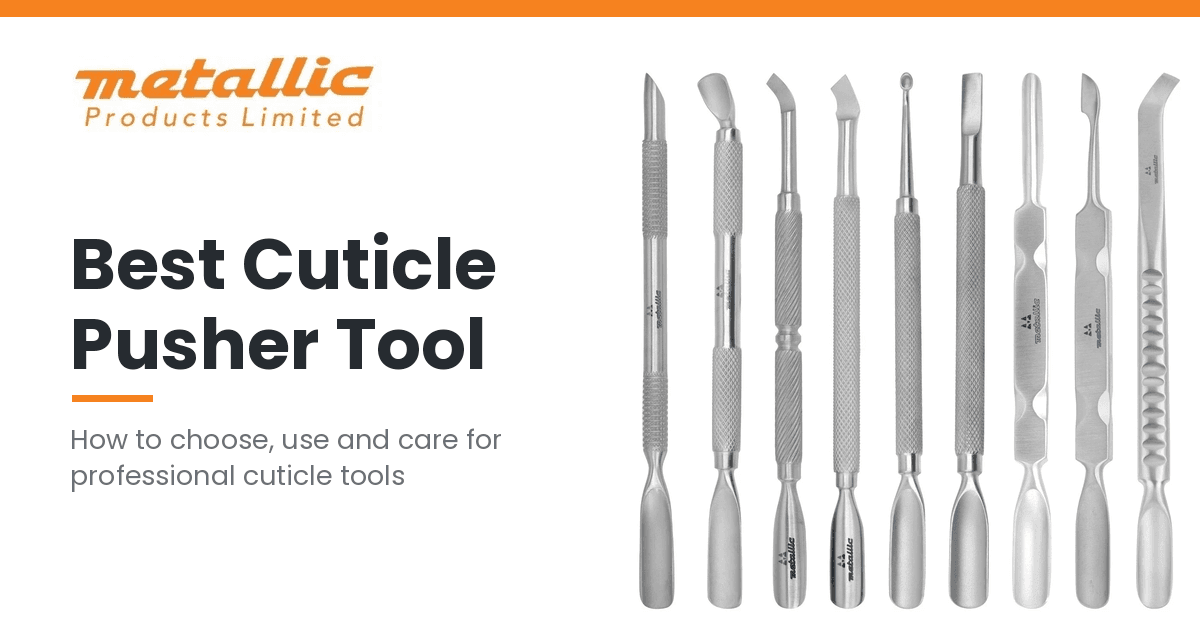
A metal cuticle tool is the professional standard. Stainless steel is strong, can be sterilised or autoclaved between clients, and keeps its shape for years. Look for a slim handle with a flat, rounded pusher end and, ideally, a small angled edge at the other end for cleaning under the free edge of the nail. If you are asking what the best type of cuticle pusher is for long-term value, surgical-grade stainless steel is hard to beat.
Glass cuticle tool
A glass cuticle tool is usually a smooth crystal glass stick with a rounded or spoon-shaped end. It is very gentle on the skin, easy to wipe clean and never rusts. The trade-off is fragility: it can chip or break if dropped, so it suits home use better than a busy salon.
Wooden cuticle pusher (orange stick)
A wood cuticle pusher tool, such as the traditional orange stick, is cheap and soft. It is single-use in a professional setting because wood is porous and cannot be properly sterilised, and it can splinter. It works for a quick tidy at home but is not a long-term solution.
Plastic cuticle pusher
A plastic cuticle pusher tool is inexpensive and lightweight, but it can scratch, bend and harbour bacteria in tiny surface marks over time. Fine as a budget starter or a travel option.
Gel (silicone) pusher tool
A gel pusher tool has a soft silicone or rubber tip. These are popular for pushing back cuticles after soaking, and for gently shaping product around the nail. The soft head makes them kinder on sensitive skin, though they are less precise for removing stubborn dead skin from the nail plate.
Cuticle pusher loop tool
A cuticle pusher loop tool has a small wire loop or curved scoop end. It is designed to sweep away softened dead skin and debris and is common in nail technician kits for detailed work around the sidewalls.
Electric cuticle pusher
An electric cuticle pusher tool uses a rotating or oscillating bit to buff away dead skin. It is fast, but it has a learning curve: too much pressure or speed can cause irritation or thin the nail. If you are new to nail care, master the manual tools first.
Cuticle oil pen pushers
Some pens combine a small pusher with a built-in cuticle oil. They are convenient for a quick daily routine, although a dedicated pusher gives you more control.
How to choose the best cuticle pusher
Whether you are comparing the best cuticle pusher tool for home or professional cuticle tools for a salon, check these five things:
- Material. Stainless steel for durability and hygiene. Glass for gentle home use.
- Head shape. A rounded, flat head with a smooth edge pushes without gouging. Avoid sharp corners on the pushing end.
- Size. A narrow head reaches the sidewalls; a wider one covers the base of the nail quickly. Many tools offer both ends.
- Grip and balance. A ridged or textured handle gives control, especially with wet hands.
- Cleanability. You should be able to wash, disinfect and fully dry it. Smooth, non-porous surfaces are best.
A combination cuticle pusher and trimmer set is a good way to build a kit if you want both tools made to match.
How to push back cuticles: step by step
If you have wondered how to use a cuticle pusher tool, this is the safest method, and the best way to push back cuticles is always after softening them.
- Wash and soften. Soak your fingers in warm water for a few minutes, or use a cuticle remover product, then pat dry.
- Hold the tool at a shallow angle. Around 45 degrees against the nail, never straight on.
- Push gently. Start at the centre of the nail base and use small, light strokes toward the cuticle, not the nail. Do not scrape the nail plate.
- Work to the sides. Use the narrow end or angled edge along the sidewalls.
- Stop if it hurts or the skin goes red. Pressure should feel like nothing more than a light nudge.
- Finish with oil. Massage in cuticle oil or a rich hand cream.
One warning for anyone searching for a push cuticles back tool: do this once or twice a week at most. Over-pushing causes inflammation and can damage the nail matrix.
What is the best tool for trimming cuticles?
A pusher moves skin; it does not remove it. For the small amount of loose, dead skin and hangnails that remain, you need a cuticle nipper tool. Many people also search for a cuticle cutter tool, cuticle cutting tool or cuticle trimmer tool; these all describe the same family of tools.
What to look for in the best cuticle trimmer tool:
- Sharp, precisely aligned blades that meet cleanly. Dull blades tear skin rather than cutting it.
- A fine, narrow jaw so you can work close without catching live skin.
- A smooth spring action for control.
- Stainless steel construction so it can be cleaned and disinfected.
How to use a tool to cut cuticles safely: only trim the dead, loose skin that has lifted away from the nail, never living tissue. If you see pink or feel pain, you have gone too far. Stop, and treat the area with an antiseptic.
A note on language: when people search for a cuticle remover tool or cuticle cleaner tool, they are often looking for one of three things: a pusher to loosen dead skin, a nipper to trim it, or a cuticle remover gel that dissolves it chemically. Used together, they give the best result. A pusher and nipper do the physical work, while a remover product softens skin first.
Professional cuticle tools for salons and nail technicians
If you work with clients, hygiene and consistency matter more than anything else. Professional-grade cuticle care tools should:
- Withstand repeated sterilisation without rusting or dulling
- Have a reliable edge that stays sharp
- Feel balanced in the hand across a full day of appointments
- Come from a manufacturer that can document its materials and finish
This is where surgical-grade stainless steel makes a difference. The same precision manufacturing used for dental and surgical instruments carries across to beauty tools, giving you sharper edges, smoother finishing and a longer working life than mass-produced alternatives.
Cuticle tools for pedicures
Toenail cuticles and skin are tougher, so pedicure cuticle tools are usually a little sturdier than finger tools. A slightly larger pusher head, a strong nipper for thicker skin and a curved nail cleaner for the nail folds are the usual essentials. Always soften the skin by soaking first; dry-pushing thick toe skin is the fastest way to cause damage.
Cuticle pusher price: what should you expect to pay?
Prices vary widely. At the budget end you will find multipacks of plastic or wooden pushers, often sold through high street stores and marketplaces. Mid-range stainless steel tools sit above that, and professional-grade pieces cost more again. Buying a cuticle pusher tool from a high street chemist, a big online marketplace or a supermarket can be convenient for a quick fix, but the quality of the metal, the finish of the edge and the consistency from batch to batch can vary.
If you search for a cuticle pusher tool nearby or a cuticle pusher tool near me, you will see local pharmacies and beauty stores, but specialist manufacturers are well worth comparing because you are buying the instrument rather than the brand name. A well-made steel tool should last for years, which usually makes it better value than replacing cheap tools again and again.
When comparing, ask: What is it made of? Can I sterilise it? Is the edge smooth and finished? Is the manufacturer clear about where and how it is made?
How to care for your cuticle tools
- Wash with warm soapy water after every use.
- Disinfect metal tools with a suitable disinfectant or an alcohol wipe; salons should follow their local hygiene requirements.
- Dry completely before storing.
- Store separately so blades and tips do not get knocked.
- Never share nippers or pushers between people without proper sterilisation.
- Replace tools that are bent, chipped, rusted or no longer cut cleanly.
Quick recommendations by need
| If you want… | Choose |
|---|---|
| The best all-round cuticle pusher | Stainless steel pusher with a rounded flat head |
| The gentlest option for home | Glass cuticle tool or gel pusher |
| The best tool for trimming cuticles | Sharp stainless steel cuticle nipper |
| Detailed sidewall cleaning | Loop or angled-edge pusher |
| A starter kit | Matching pusher and nipper set |
| A salon-ready kit | Sterilisable professional-grade steel tools |
Frequently asked questions
A smooth stainless steel pusher used on softened skin is the most reliable choice. Glass and gel pushers are good, gentle alternatives.
A pusher and a nipper together. The pusher moves the skin and the nipper removes loose dead skin.
Yes for a quick home tidy, but wood cannot be sterilised and can splinter, so it should be thrown away after use.
Once a week is plenty for most people. Daily oiling is more beneficial than frequent pushing.
Only the loose, dead skin and hangnails. Never cut the living cuticle, as it protects the nail from infection.
It is faster, not necessarily better. Manual tools give more control, especially for beginners.
Final thoughts
The best cuticle tools are simple, well-made and easy to keep clean. Start with a quality stainless steel pusher, add a sharp nipper, soften your skin before you work, and finish with oil. Do that, and you will get a neat, healthy-looking manicure without the irritation that comes from poor tools or heavy-handed technique.
Ready to build your kit? Browse the Metallic Products range of manicure and beauty instruments, precision-made in stainless steel for home users and professionals alike.