
Surgical Instruments
How to Choose the Right Ear Specula for Clinical Examinations
How to Choose the Right Ear Specula for Clinical Examinations
Definition
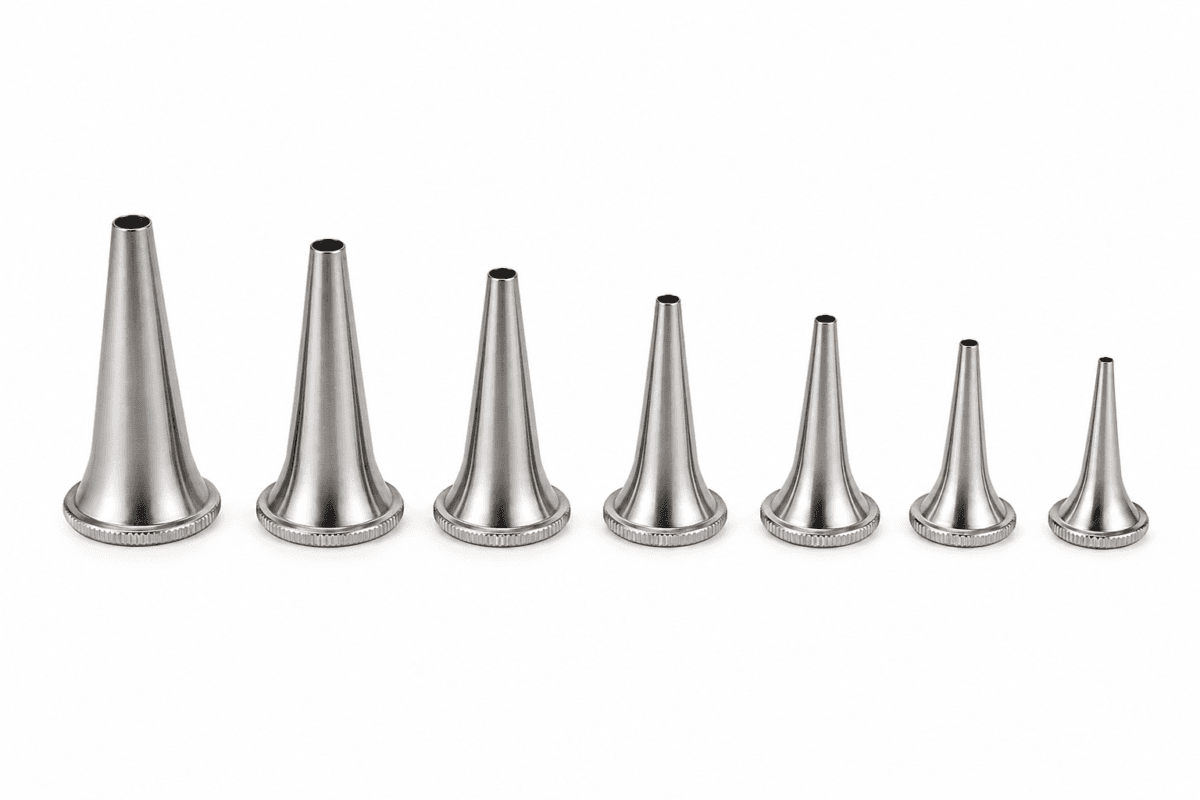
Ear specula are cone shaped instruments used to gently widen the ear canal, allowing clinicians a clear view of the ear canal and eardrum during an otoscopic examination. Available in reusable stainless steel or single use disposable materials, they are a standard tool in general practice, ENT clinics, and paediatric care.
Introduction
Understanding how to choose the right ear specula is essential for GPs, ENT specialists, and clinical staff performing routine ear examinations. A well chosen speculum supports a clear, unobstructed view of the ear canal and eardrum, improves patient comfort, and helps clinicians work efficiently across a full day of appointments. This guide covers the key differences between reusable and disposable specula, sizing considerations, and what to look for when choosing instruments for clinical use.
Why Instrument Quality Matters in Ear Examinations
Ear examinations require a clear, unobstructed view of the ear canal, which depends on a speculum that fits comfortably and maintains a stable position throughout the exam.
Good quality specula help clinicians:
- Achieve a clear, stable view of the ear canal and eardrum
- Reduce patient discomfort during examination
- Work efficiently across routine and high volume clinics
- Maintain consistent results across different patient ages
- Extend the working life of the instrument, for reusable designs
As a result, choosing the right ear specula is an important part of both general practice and specialist ENT care.
Reusable vs Disposable Ear Specula
| Feature | Reusable Stainless Steel | Disposable Plastic |
|---|---|---|
| Material | Surgical grade stainless steel | Medical grade plastic |
| Sterilisation | Autoclavable, reused after cleaning | Single use, discarded after each patient |
| Cost over time | Lower long term cost | Higher recurring cost |
| Infection control | Requires proper sterilisation between patients | Reduces cross contamination risk by design |
| Best suited for | Practices with reliable sterilisation processes | High volume clinics prioritising fast turnover |
Reusable stainless steel specula remain the dominant choice in hospitals and specialist ENT departments, largely due to their durability and compatibility with repeated high temperature sterilisation, while disposable options are increasingly common in high volume primary care settings focused on infection control.
1. Size Range and Graduation
Ear canals vary significantly by patient age and anatomy, so a proper set includes multiple sizes.
A well rounded set typically includes:
- Small sizes for paediatric examinations
- Medium sizes for general adult use
- Larger sizes for adult patients with wider ear canals
Consequently, having a full graduated set on hand allows clinicians to select the right fit for every patient without delay.
2. Material and Finish
The material affects both durability and how the instrument performs during use.
Premium stainless steel specula offer:
- A smooth, polished surface for patient comfort
- Resistance to corrosion across repeated sterilisation cycles
- Long term durability compared to disposable alternatives
- Consistent performance that does not degrade with reuse
Furthermore, a smooth, well finished edge reduces the risk of discomfort during insertion.
3. Compatibility with Otoscopes
Most ear specula are designed to attach to a standard otoscope, so compatibility matters.
When choosing specula, confirm:
- The fitting matches your existing otoscope brand and model
- Sizes align with your otoscope’s compatible range
- Reusable specula maintain a secure, stable fit after repeated sterilisation
Therefore, checking compatibility before ordering avoids a mismatch between your specula and existing equipment.
Common Names and Types You Might See
Ear specula (also written as ear speculum in the singular) are sometimes searched or labelled under specific named designs. Knowing these helps when comparing suppliers or matching a specific type your practice already uses:
- Hartmann Ear Speculum, a widely used standard design in general practice
- Farrior Ear Speculum, favoured in some ENT settings for its shape and grip
- Boucheron Ear Speculum, a funnel style design used for wider access during procedures
- Aural Speculum, an alternative clinical term for the same instrument family
Regardless of the specific named type, the core selection factors, size, material, and otoscope compatibility, remain the same.
4. Sterilisation Compatibility
For reusable stainless steel specula, durability under sterilisation is essential.
Premium instruments are designed to:
- Withstand repeated autoclave sterilisation without corroding
- Maintain a smooth surface finish over time
- Meet clinical hygiene and infection control standards
As a result, investing in sterilisation compatible specula supports both compliance and long term reliability.
Checklist: Choosing the Right Ear Specula
- Confirm reusable stainless steel or disposable best suits your practice’s sterilisation workflow
- Choose a graduated size set covering paediatric through adult patients
- Check compatibility with your existing otoscope
- Confirm autoclave compatibility for reusable designs
- Inspect regularly for wear, corrosion, or damage to the fitting
Common Mistakes When Selecting Ear Specula
- Using a single size across all patients, reducing exam accuracy for very young or very large ear canals
- Overlooking otoscope compatibility before ordering
- Reusing specula without proper sterilisation between patients
- Continuing to use specula with a worn or loose otoscope fitting
Frequently Asked Questions
Smaller specula are generally used for paediatric examinations, since children typically have narrower ear canals than adults. Most graduated sets include dedicated paediatric sizes.
Both have a place in clinical practice. Reusable stainless steel specula offer durability and lower long term cost, while disposable specula reduce cross contamination risk and suit high volume clinics prioritising fast turnover.
They should be cleaned and sterilised after every patient use, following standard clinical infection control protocols.
Not always. Fittings can vary between manufacturers, so it is worth confirming compatibility with your specific otoscope before ordering.
If the fitting no longer attaches securely, the surface shows visible corrosion, or the edge feels rough despite proper care, it is time to replace it.
Yes, aural speculum is simply another clinical term for the same instrument used to examine the ear canal. Ear specula, ear speculum, and aural speculum all refer to the same category of tool.
Conclusion
Understanding how to choose the right ear specula helps clinicians and practice managers select instruments suited to their patient population and sterilisation workflow. Size range, material quality, otoscope compatibility, and sterilisation durability all contribute to a clearer, more comfortable examination for every patient.
Explore our full range of ear specula, or get in touch with our team for bulk or trade orders.