
Uncategorized
What to Look for When Buying Dental Extraction Forceps: A Buyer’s Guide for Dental Practices
What to Look for When Buying Dental Extraction Forceps: A Buyer’s Guide for Dental Practices
Introduction
Selecting the right extraction instruments is essential for safe, efficient, and predictable tooth removal procedures. Understanding what to look for when buying dental extraction forceps can help dentists, oral surgeons, and procurement teams invest in instruments that provide reliable performance, long-term durability, and excellent clinical control.
With a wide range of extraction forceps available, choosing the right instrument involves more than simply selecting a pattern number. Factors such as material quality, beak design, ergonomics, and manufacturing precision all play a role in clinical performance. As a result, evaluating these features before purchasing can help practices make more informed buying decisions.
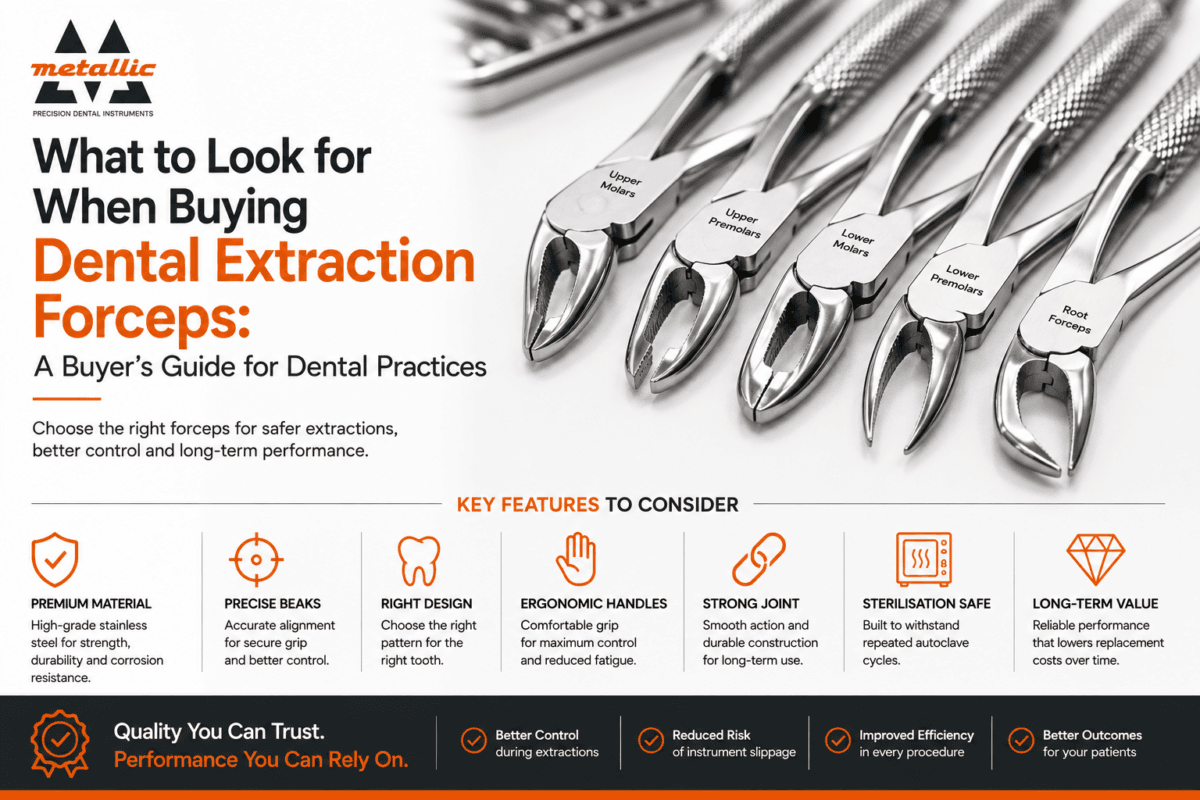
Why the Quality of Dental Extraction Forceps Matters
Dental extraction forceps are among the most frequently used instruments in oral surgery and general dentistry.
High-quality forceps can help:
- Improve extraction efficiency
- Enhance clinician control
- Reduce instrument slippage
- Support patient comfort
- Deliver long-term value
Therefore, selecting the right forceps is an important investment for any dental practice.
1. High-Quality Stainless Steel Construction
One of the first factors to consider is the quality of the material.
Professional dental extraction forceps should be manufactured from high-grade stainless steel that offers:
- Corrosion resistance
- Long-term durability
- Sterilisation compatibility
- Structural strength
Consequently, high-quality materials help ensure reliable performance throughout the instrument’s lifespan.
2. Precision Beak Alignment
Beak alignment is one of the most important features of extraction forceps.
Properly aligned beaks help:
- Securely engage tooth anatomy
- Improve grip during extraction
- Reduce unnecessary force
- Enhance procedural control
As a result, precise beak alignment can contribute significantly to successful extractions.
3. Appropriate Forceps Design for the Intended Procedure
Different teeth require different forceps designs.
Common categories include:
Upper Extraction Forceps
Designed to match the anatomy of maxillary teeth and roots.
Lower Extraction Forceps
Engineered for mandibular extractions where access and leverage requirements differ.
Root Forceps
Used for retained roots and root fragments.
Universal Forceps
Suitable for a variety of extraction procedures.
Therefore, practices should ensure they have the appropriate forceps for their clinical needs.
4. Comfortable Ergonomic Handles
Comfort and control are essential during extraction procedures.
Well-designed handles can help:
- Improve grip security
- Reduce hand fatigue
- Enhance instrument control
- Support clinician comfort
Consequently, ergonomic forceps may improve efficiency during lengthy procedures.
5. Strong Joint Construction
The box joint is a critical component of extraction forceps.
A well-manufactured joint should provide:
- Smooth movement
- Consistent alignment
- Reliable performance
- Long-term durability
As a result, strong joint construction helps maintain instrument functionality over time.
6. Sterilisation Resistance
Dental extraction forceps undergo repeated cleaning and sterilisation cycles.
When evaluating forceps, practices should look for instruments that:
- Resist corrosion
- Maintain alignment
- Preserve surface quality
- Perform consistently after repeated autoclaving
Therefore, sterilisation compatibility is an important indicator of quality.
7. Manufacturing Consistency
Reliable instruments depend on consistent manufacturing standards.
High-quality forceps should offer:
- Uniform dimensions
- Consistent beak geometry
- Predictable handling characteristics
- Reliable performance across instrument sets
Consequently, clinicians can work with greater confidence and precision.
8. Durability and Long-Term Value
Although lower-cost instruments may reduce upfront expenses, long-term value should also be considered.
High-quality extraction forceps often provide:
- Longer service life
- Reduced replacement frequency
- Consistent clinical performance
- Lower lifetime ownership costs
As a result, many practices prioritise quality over the lowest purchase price.
Common Mistakes When Buying Dental Extraction Forceps
Many buyers focus primarily on cost and overlook important quality indicators.
Common mistakes include:
- Ignoring material quality
- Overlooking beak alignment
- Choosing forceps based solely on price
- Failing to consider ergonomics
- Purchasing from unverified manufacturers
Consequently, these decisions can affect both performance and longevity.
Questions Dental Practices Should Ask Before Purchasing
Before investing in extraction forceps, consider the following questions:
- Are the forceps manufactured from high-quality stainless steel?
- Is the beak alignment precise and consistent?
- Are the handles comfortable during extended use?
- Can the instrument withstand repeated sterilisation cycles?
- Does the manufacturer have a reputation for quality and reliability?
These questions can help practices identify instruments that offer long-term value.
Why High-Quality Forceps Improve Clinical Efficiency
Reliable extraction forceps can contribute to:
- Better tooth engagement
- Improved clinician control
- Reduced procedural delays
- Greater confidence during extractions
- More predictable outcomes
Therefore, instrument quality directly supports clinical efficiency and patient care.
Role of Metallic Products
Metallic Products manufactures precision-engineered dental extraction forceps designed for modern clinical requirements.
Features include:
- Premium stainless steel construction
- Precision-aligned beaks
- Durable box joint mechanisms
- Ergonomic handling designs
- Sterilisation-compatible manufacturing
This helps dental professionals achieve reliable performance across a wide range of extraction procedures.
Conclusion
Understanding what to look for when buying dental extraction forceps helps dental professionals make informed purchasing decisions. From material quality and beak alignment to ergonomics and durability, several factors influence the performance and lifespan of extraction instruments.
By investing in high-quality extraction forceps, dental practices can improve efficiency, support better treatment outcomes, and achieve greater long-term value.