
Metallic Blogs
How Dental Practices Can Prepare for Growing Patient Demand Without Increasing Operational Costs
How Dental Practices Can Prepare for Growing Patient Demand Without Increasing Operational Costs
Introduction
Understanding how dental practices can prepare for growing patient demand without increasing operational costs has become a priority for many clinics in 2026. As patient numbers continue to rise, dental practices face increasing pressure to deliver efficient care while maintaining profitability and high clinical standards.
While expanding facilities or hiring additional staff may seem like the obvious solution, many successful practices are finding ways to manage higher patient volumes through smarter workflows, better instrument management, and improved operational efficiency. As a result, clinics can accommodate growth without significantly increasing expenses.
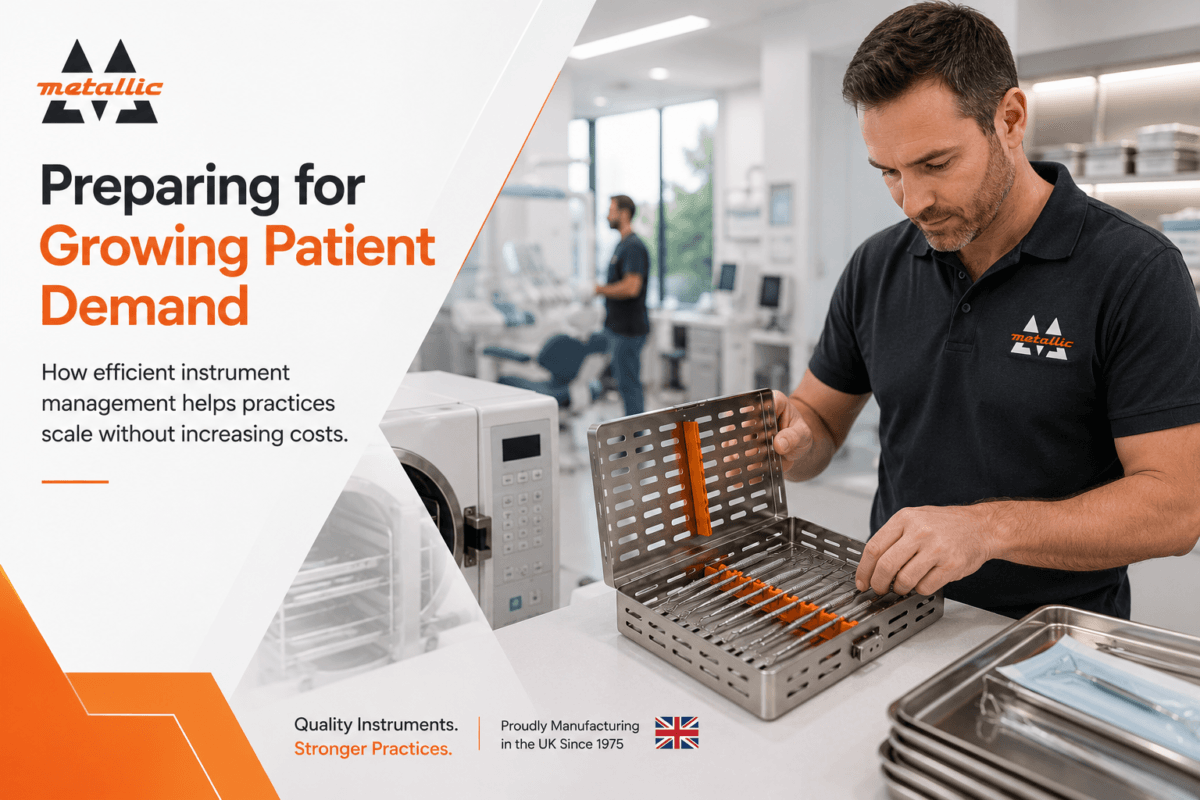
Why Patient Demand Is Increasing
Several factors are contributing to higher demand for dental services, including:
- Greater awareness of oral health
- Increased demand for cosmetic treatments
- Growing populations in urban areas
- Improved access to dental care
- Preventive dentistry initiatives
Consequently, many practices are experiencing busier schedules and higher appointment volumes than ever before.
The Challenge of Managing Growth
Although increased patient demand creates opportunities for growth, it can also create challenges such as:
- Appointment delays
- Instrument shortages
- Staff workload pressures
- Sterilisation bottlenecks
- Rising operational costs
Therefore, clinics must focus on efficiency as they expand their services.
1. Improve Appointment Efficiency
One of the most effective ways to manage higher patient volumes is to improve appointment efficiency.
Practices can achieve this by:
- Reducing treatment delays
- Streamlining patient flow
- Standardising clinical procedures
- Improving preparation processes
As a result, clinicians can see more patients without compromising care quality.
2. Invest in High-Quality Dental Instruments
Instrument quality directly affects treatment efficiency.
High-quality instruments often provide:
- Better precision
- Improved reliability
- Reduced procedure times
- Longer service life
Consequently, clinicians can work more efficiently while maintaining consistent treatment outcomes.
3. Standardise Instrument Sets
Standardised instrument kits help reduce preparation time and improve workflow consistency.
For example, clinics can create dedicated sets for:
- Examinations
- Hygiene procedures
- Restorative treatments
- Surgical procedures
Therefore, staff spend less time organising instruments and more time supporting patient care.
4. Optimise Sterilisation Workflows
Sterilisation delays can significantly affect patient scheduling.
Clinics can improve efficiency by:
- Organising reprocessing areas effectively
- Scheduling sterilisation cycles strategically
- Increasing instrument availability
- Using clear workflow procedures
As a result, instrument turnaround times become faster and more predictable.
5. Use Instrument Cassettes for Better Organisation
Instrument cassettes help practices improve both efficiency and infection control.
Benefits include:
- Reduced instrument handling
- Faster sterilisation processing
- Improved organisation
- Better instrument protection
Consequently, clinics can support higher patient volumes without creating workflow disruptions.
6. Strengthen Inventory Management
Poor inventory management often leads to unnecessary delays.
Practices should regularly monitor:
- Instrument availability
- Replacement schedules
- Maintenance requirements
- Procedure-specific inventory needs
Because of this, clinics can avoid shortages that affect daily operations.
7. Train Staff to Support Efficiency
Staff training remains one of the most cost-effective ways to improve performance.
Training should cover:
- Instrument handling
- Sterilisation procedures
- Workflow management
- Equipment maintenance
Therefore, teams can work more efficiently while maintaining clinical standards.
8. Reduce Instrument Downtime
Damaged or poorly maintained instruments can disrupt treatment schedules.
To reduce downtime, clinics should:
- Perform regular inspections
- Follow maintenance schedules
- Replace worn instruments promptly
- Store instruments correctly
As a result, practices can maintain a consistent supply of functional instruments.
9. Focus on Preventive Maintenance
Preventive maintenance helps clinics avoid unexpected costs and disruptions.
A maintenance programme should include:
- Routine inspections
- Cleaning verification
- Performance checks
- Replacement planning
Consequently, instruments remain reliable and available when needed.
10. Build Scalable Clinical Systems
The most successful practices prepare for future growth by developing systems that can scale efficiently.
Examples include:
- Standardised workflows
- Consistent instrument management
- Organised inventory systems
- Efficient sterilisation processes
Therefore, clinics can accommodate additional patients without significantly increasing operational complexity.
Why Efficiency Matters More Than Expansion
Many practices assume growth requires larger facilities or major investments.
However, improving efficiency often delivers better results by:
- Increasing patient capacity
- Reducing operational waste
- Improving staff productivity
- Supporting profitability
As a result, practices can grow sustainably while controlling costs.
How High-Quality Instruments Support Practice Growth
Reliable instruments contribute to:
- Faster procedures
- Reduced treatment interruptions
- Better workflow consistency
- Lower replacement costs
Consequently, instrument quality becomes an important part of long-term business planning.
Role of Metallic Products
Metallic Products supports dental professionals with:
- Precision-engineered stainless steel instruments
- Durable clinical-grade manufacturing
- Sterilisation-compatible designs
- Reliable long-term performance
This helps practices improve efficiency, maintain treatment quality, and support sustainable growth.
Conclusion
Understanding how dental practices can prepare for growing patient demand without increasing operational costs is essential for long-term success. By improving workflows, optimising sterilisation processes, standardising instrument management, and investing in high-quality instruments, clinics can increase patient capacity while maintaining efficiency and profitability.
Practices that focus on operational excellence today will be better positioned to meet growing patient expectations in the years ahead.