
Uncategorized
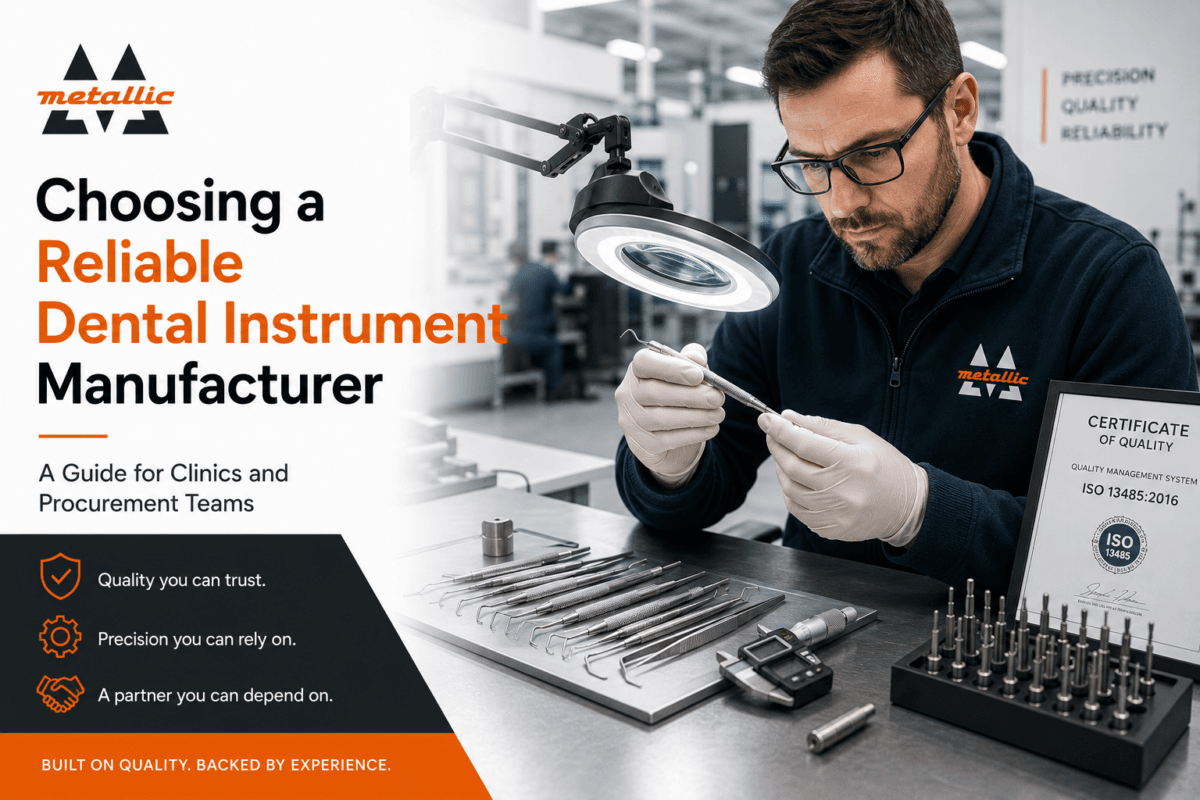
What Makes a Dental Instrument Manufacturer Reliable? A Guide for Clinics and Procurement Teams
What Makes a Dental Instrument Manufacturer Reliable? A Guide for Clinics and Procurement Teams
Introduction
Understanding what makes a dental instrument manufacturer reliable is essential for clinics, procurement managers, and dental professionals seeking consistent quality, long-term value, and dependable supply chains. While pricing often influences purchasing decisions, the reliability of the manufacturer behind the instruments can have a far greater impact on clinical performance and operational efficiency.
In 2026, dental practices are placing greater emphasis on supplier evaluation as they seek durable instruments, consistent manufacturing standards, and dependable product availability. As a result, choosing the right manufacturer has become an important part of successful procurement planning.
Why Manufacturer Reliability Matters
Dental instruments play a critical role in patient care, treatment precision, and workflow efficiency.
A reliable manufacturer helps ensure:
- Consistent instrument quality
- Long-term durability
- Predictable performance
- Reliable supply availability
- Better value over time
Therefore, evaluating manufacturers carefully can help clinics avoid unnecessary operational challenges.
1. Consistent Manufacturing Standards
One of the strongest indicators of a reliable manufacturer is consistency.
Clinics should look for manufacturers that maintain:
- Standardised production processes
- Consistent instrument specifications
- Repeatable quality outcomes
- Strict manufacturing controls
As a result, every instrument delivered performs as expected.
2. High-Quality Materials
Material quality directly affects instrument performance and lifespan.
Reliable manufacturers typically use:
- Surgical-grade stainless steel
- Corrosion-resistant materials
- Durable alloys suitable for repeated sterilisation
- High-quality finishing processes
Consequently, instruments remain reliable throughout their service life.
3. Strong Quality Control Procedures
Quality control is essential for ensuring product consistency.
A dependable manufacturer should inspect:
- Instrument alignment
- Surface finishing
- Cutting performance
- Joint functionality
- Material integrity
Because of this, clinics receive instruments that meet professional standards.
4. Focus on Durability
Dental instruments experience constant use and repeated sterilisation cycles.
Reliable manufacturers design instruments to withstand:
- Daily clinical use
- Frequent cleaning procedures
- Repeated autoclave cycles
- Long-term operational demands
Therefore, durability becomes a key measure of manufacturing quality.
5. Precision Engineering
Precision is critical in modern dentistry.
Manufacturers that prioritise precision engineering often produce instruments with:
- Accurate working ends
- Consistent alignment
- Better balance
- Improved handling characteristics
As a result, clinicians can perform procedures with greater confidence and accuracy.
6. Reliable Supply and Availability
A manufacturer’s reliability extends beyond product quality.
Clinics also depend on:
- Consistent stock availability
- Predictable lead times
- Stable product lines
- Efficient order fulfilment
Consequently, supply reliability plays an important role in procurement planning.
7. Industry Experience and Expertise
Experience often reflects a manufacturer’s understanding of clinical requirements.
Established manufacturers typically have:
- Deep industry knowledge
- Refined production processes
- Better understanding of user needs
- Proven manufacturing capabilities
Therefore, experience can be a valuable indicator of reliability.
8. Commitment to Continuous Improvement
The dental industry continues to evolve.
Reliable manufacturers invest in:
- Product development
- Manufacturing improvements
- Workflow optimisation
- Quality enhancement initiatives
As a result, clinics benefit from products that continue to meet changing industry needs.
9. Strong Customer Support
Reliable manufacturers support customers beyond the sale.
This may include:
- Product guidance
- Order assistance
- Technical information
- Ongoing communication
Because of this, clinics can build stronger long-term supplier relationships.
10. Reputation for Consistency
A manufacturer’s reputation often reflects years of performance.
When evaluating suppliers, clinics should consider:
- Customer feedback
- Market presence
- Product consistency
- Long-term reliability
Therefore, reputation remains an important factor during supplier selection.
Questions Procurement Teams Should Ask Manufacturers
Before choosing a supplier, procurement teams should ask:
- What materials are used in manufacturing?
- How is product quality verified?
- How are instruments tested before delivery?
- What quality control procedures are followed?
- How is product consistency maintained?
These questions help buyers make more informed decisions.
Common Risks of Choosing an Unreliable Manufacturer
Selecting the wrong manufacturer can lead to:
- Inconsistent product quality
- Increased replacement costs
- Workflow disruptions
- Instrument performance issues
- Supply chain challenges
As a result, clinics may experience higher long-term costs despite lower initial prices.
How Reliable Manufacturers Support Practice Efficiency
When clinics work with dependable manufacturers, they often benefit from:
- Fewer instrument failures
- Reduced replacement frequency
- Better treatment consistency
- Improved operational efficiency
- Greater procurement confidence
Consequently, manufacturer reliability contributes directly to clinical and business success.
Role of Metallic Products
Metallic Products supports dental professionals with:
- Precision-engineered stainless steel instruments
- Consistent manufacturing standards
- Durable clinical-grade construction
- Sterilisation-compatible designs
- Reliable long-term performance
This helps clinics maintain efficiency, treatment quality, and procurement confidence.
Conclusion
Understanding what makes a dental instrument manufacturer reliable helps clinics and procurement teams make smarter purchasing decisions. From material quality and precision engineering to quality control and supply reliability, several factors contribute to manufacturing excellence.
By partnering with trusted manufacturers such as Metallic Products, dental practices can improve instrument performance, support operational efficiency, and achieve greater long-term value.