
Metallic Blogs
How Dental Clinics Can Reduce Sterilisation Bottlenecks During Busy Days
How Dental Clinics Can Reduce Sterilisation Bottlenecks During Busy Days
Introduction
Understanding how dental clinics can reduce sterilisation bottlenecks during busy days is essential for maintaining efficient workflows, supporting patient schedules, and ensuring compliance with infection control standards.
In many practices, sterilisation delays can slow treatment turnover, create scheduling challenges, and increase pressure on staff. As patient volumes continue to rise in 2026, clinics are looking for practical ways to improve instrument availability without compromising safety.
Fortunately, a well-organised sterilisation process can significantly reduce bottlenecks and improve overall practice efficiency.
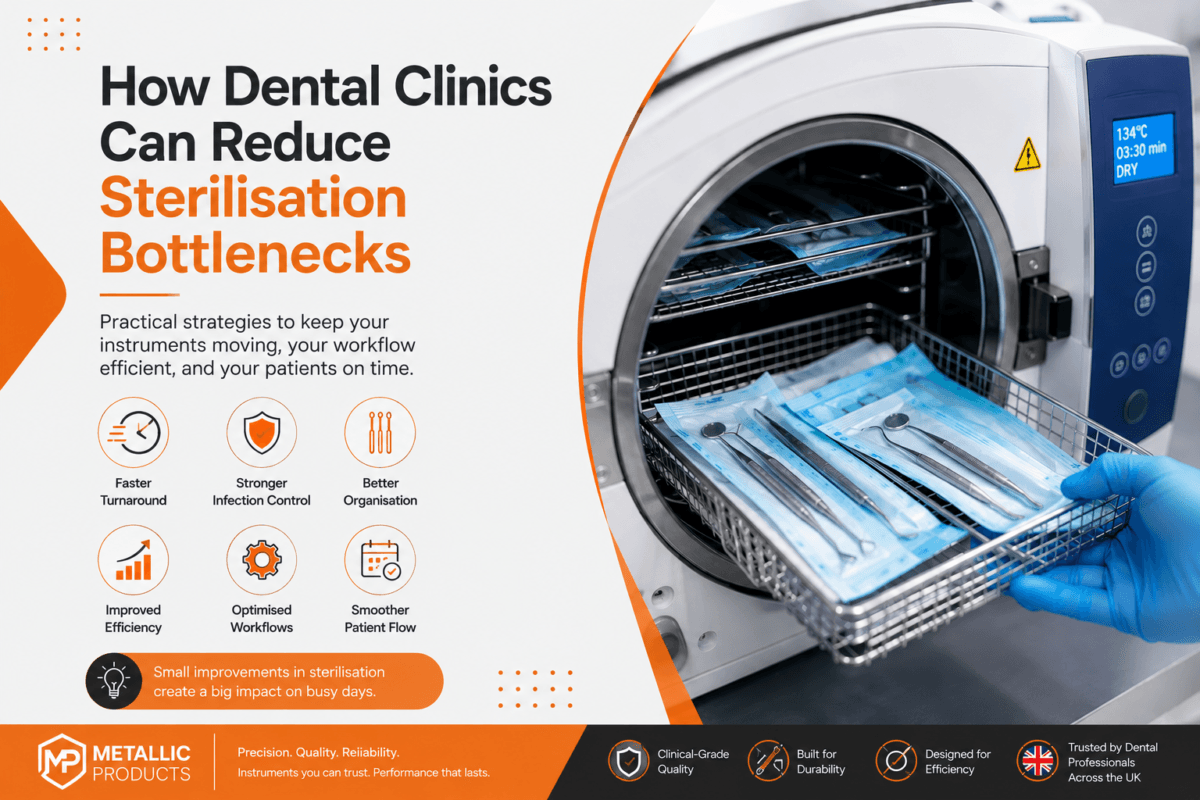
What Is a Sterilisation Bottleneck?
A sterilisation bottleneck occurs when instruments are not processed quickly enough to meet clinical demand.
This can result in:
- Delayed appointments
- Staff frustration
- Reduced productivity
- Instrument shortages
- Increased workflow interruptions
Therefore, identifying and eliminating bottlenecks should be a priority for busy practices.
1. Standardise Instrument Sets
One of the simplest ways to improve workflow is by creating standardised instrument kits for common procedures.
Examples include:
- Examination sets
- Hygiene kits
- Restorative procedure sets
- Surgical kits
As a result, staff spend less time assembling instruments and can process complete sets more efficiently.
2. Use Instrument Cassettes
Instrument cassettes allow instruments to remain organised throughout cleaning, sterilisation, storage, and clinical use.
Benefits include:
- Reduced handling
- Faster processing
- Improved organisation
- Better instrument protection
Consequently, instrument turnaround times often improve significantly.
3. Increase Instrument Inventory for High-Demand Procedures
Many bottlenecks occur because clinics do not have enough instrument sets available.
Additional sets for frequently performed procedures can:
- Reduce waiting times
- Support continuous patient flow
- Minimise scheduling delays
Therefore, investing in extra instruments may improve overall efficiency.
4. Optimise Reprocessing Room Layout
A poorly organised reprocessing room can slow every stage of instrument processing.
An efficient layout should support:
- Clear dirty-to-clean workflow
- Easy equipment access
- Minimal staff movement
- Proper storage organisation
As a result, sterilisation tasks can be completed more quickly and consistently.
5. Train Staff on Efficient Reprocessing Procedures
Staff training plays a major role in preventing delays.
Dental nurses should understand:
- Cleaning protocols
- Sterilisation cycles
- Instrument organisation
- Equipment operation
Because of this, well-trained teams can process instruments more efficiently while maintaining compliance.
6. Schedule Sterilisation Cycles Strategically
Busy clinics often benefit from planning sterilisation cycles around appointment schedules.
This may involve:
- Running cycles during peak periods
- Preparing instrument sets in advance
- Monitoring daily demand patterns
Consequently, instrument availability becomes more predictable.
7. Conduct Regular Equipment Maintenance
Sterilisation equipment must operate reliably during busy periods.
Routine maintenance helps:
- Prevent breakdowns
- Maintain cycle efficiency
- Reduce unexpected downtime
- Extend equipment lifespan
Therefore, preventative maintenance should be part of every clinic’s workflow strategy.
8. Improve Instrument Tracking
Many practices lose time searching for instruments or determining sterilisation status.
Tracking systems can help monitor:
- Instrument location
- Processing status
- Available inventory
- Maintenance schedules
As a result, staff spend less time managing instruments manually.
9. Reduce Instrument Damage
Damaged instruments often create unexpected shortages.
Clinics can reduce damage by:
- Using proper storage systems
- Implementing handling protocols
- Conducting regular inspections
- Training staff effectively
Therefore, more instruments remain available for clinical use.
10. Invest in High-Quality Instruments
High-quality instruments are designed to withstand repeated cleaning and sterilisation cycles.
Benefits include:
- Greater durability
- Better corrosion resistance
- Longer lifespan
- Consistent performance
Consequently, clinics experience fewer disruptions caused by instrument failure.
Common Causes of Sterilisation Delays
Many clinics experience bottlenecks due to:
- Insufficient instrument inventory
- Poor workflow design
- Inadequate staff training
- Equipment downtime
- Disorganised storage systems
Identifying these issues is often the first step toward improving efficiency.
Why Efficient Sterilisation Matters
Efficient sterilisation workflows help clinics:
- Increase patient capacity
- Improve appointment flow
- Maintain infection control standards
- Reduce staff stress
- Improve operational efficiency
As a result, practices can deliver a better experience for both patients and staff.
Role of Metallic Products
Metallic Products supports dental clinics with:
- Precision-engineered stainless steel instruments
- Durable sterilisation-compatible designs
- Reliable clinical performance
- Long-lasting professional quality
This helps practices maintain efficient instrument workflows and reduce operational disruptions.
Conclusion
Understanding how dental clinics can reduce sterilisation bottlenecks during busy days helps practices improve workflow efficiency, maintain instrument availability, and support high infection control standards. By standardising instrument sets, optimising reprocessing workflows, and investing in quality instruments, clinics can minimise delays and improve daily operations.