
Metallic Blogs
How Dental Clinics Are Using Instrument Cassettes to Improve Efficiency and Infection Control
How Dental Clinics Are Using Instrument Cassettes to Improve Efficiency and Infection Control
Introduction
Understanding how dental clinics are using instrument cassettes to improve efficiency and infection control is becoming increasingly important as practices look for ways to streamline workflows, reduce handling errors, and strengthen sterilisation procedures.
In 2026, dental clinics face growing pressure to improve productivity while maintaining high infection control standards. As a result, instrument cassette systems are becoming a popular solution for organising, sterilising, storing, and transporting dental instruments more efficiently.
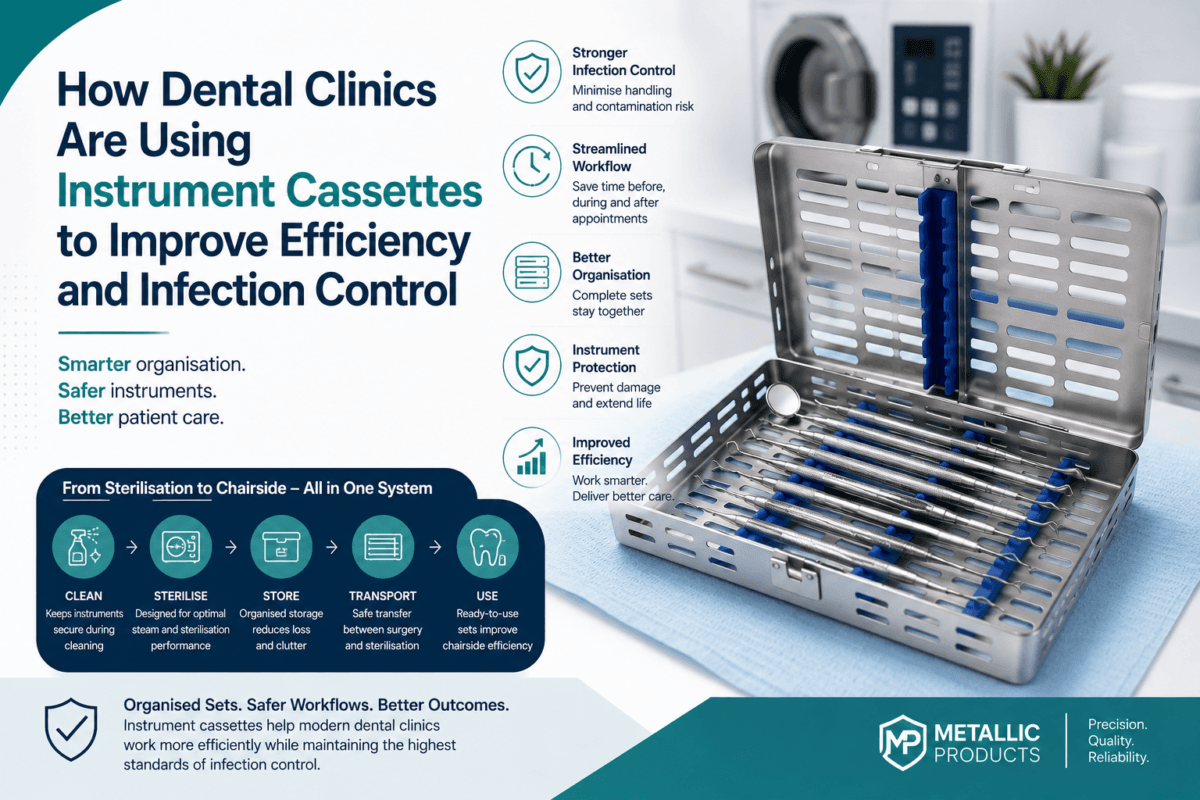
What Are Dental Instrument Cassettes?
Dental instrument cassettes are specially designed containers that securely hold instrument sets throughout the cleaning, sterilisation, storage, and clinical use process.
Rather than handling individual instruments multiple times, clinics can keep complete instrument sets organised within a single cassette.
Typically, cassettes are used for:
- Examination kits
- Hygiene instrument sets
- Surgical procedures
- Restorative treatments
- Periodontal procedures
Therefore, they simplify instrument management across the entire workflow.
Why Instrument Cassettes Are Growing in Popularity
Modern dental clinics are increasingly focused on:
- Infection control
- Workflow efficiency
- Staff productivity
- Instrument protection
- Standardised procedures
Because of this, cassette systems offer practical advantages that support daily operations.
1. Reducing Instrument Handling Improves Infection Control
Every time an instrument is touched, there is a potential risk of contamination.
Instrument cassettes help reduce:
- Manual handling
- Instrument transfers
- Exposure during processing
- Accidental contamination
As a result, clinics can strengthen infection control procedures and improve overall safety.
2. Streamlining the Sterilisation Process
Sterilisation becomes more efficient when instruments remain organised throughout the reprocessing cycle.
With cassette systems, staff can:
- Clean complete instrument sets together
- Sterilise multiple instruments simultaneously
- Reduce sorting time
- Improve processing consistency
Consequently, sterilisation workflows become faster and more predictable.
3. Improving Workflow Efficiency
Time savings are one of the biggest advantages of instrument cassettes.
Instead of assembling instruments individually before each appointment, clinicians can access complete pre-arranged sets.
This helps:
- Reduce preparation time
- Improve appointment turnaround
- Increase staff efficiency
- Support smoother workflows
Therefore, clinics can manage busy schedules more effectively.
4. Protecting Instruments From Damage
Dental instruments are precision tools that require proper care.
During cleaning and sterilisation, cassettes help prevent:
- Tip damage
- Instrument collisions
- Scratches
- Misalignment
As a result, instruments often maintain their performance and appearance for longer periods.
5. Supporting Instrument Organisation
Instrument organisation becomes easier when specific sets are assigned to specific procedures.
Examples include:
- Hygiene cassettes
- Examination cassettes
- Surgical cassettes
- Implant procedure cassettes
Because of this, staff can quickly locate the correct instruments when needed.
6. Reducing Instrument Loss
In busy clinics, misplaced instruments can create unnecessary costs.
Cassette systems help by:
- Keeping instruments grouped together
- Improving inventory control
- Reducing misplaced items
- Supporting accountability
Consequently, practices often experience fewer instrument replacement expenses.
7. Enhancing Staff Safety
Sharp dental instruments present handling risks during cleaning and sterilisation.
By keeping instruments secured within cassettes, clinics can reduce:
- Accidental injuries
- Sharps-related incidents
- Unnecessary instrument exposure
Therefore, staff safety improves throughout the reprocessing process.
8. Standardising Clinical Procedures
Many successful practices use standardised instrument sets for specific treatments.
This approach helps:
- Improve consistency
- Simplify staff training
- Reduce preparation errors
- Support clinical efficiency
As a result, treatment workflows become more predictable and reliable.
9. Supporting High-Volume Dental Practices
Clinics with high patient volumes benefit particularly from cassette systems.
These practices often need:
- Faster instrument turnaround
- Better organisation
- Reduced downtime
- Efficient sterilisation workflows
Because of this, instrument cassettes have become increasingly common in larger dental environments.
10. Why Instrument Quality Still Matters
Even the best cassette system depends on the quality of the instruments inside it.
High-quality stainless steel instruments offer:
- Better durability
- Greater corrosion resistance
- Consistent clinical performance
- Long-term reliability
Therefore, clinics should combine efficient organisation systems with professional-grade instruments.
How Instrument Cassettes Support Modern Infection Control Strategies
As infection control requirements continue to evolve, clinics are looking for systems that improve compliance without reducing efficiency.
Instrument cassettes help support:
- Controlled instrument handling
- Consistent sterilisation processes
- Safer transportation of instruments
- Better workflow management
As a result, they have become an important component of modern dental practice operations.
Role of Metallic Products
Metallic Products supports dental professionals with:
- Precision-engineered stainless steel dental instruments
- Sterilisation-compatible instrument solutions
- Durable clinical-grade manufacturing
- Reliable long-term performance
This helps clinics improve efficiency, organisation, and infection control standards.
Conclusion
Understanding how dental clinics are using instrument cassettes to improve efficiency and infection control helps practices identify practical ways to strengthen workflow management and sterilisation procedures. By reducing instrument handling, improving organisation, and supporting safer reprocessing, cassette systems offer significant benefits for modern dental clinics.
When combined with high-quality instruments from Metallic Products, these systems can help practices improve efficiency, protect valuable instruments, and maintain high infection control standards.