
Uncategorized
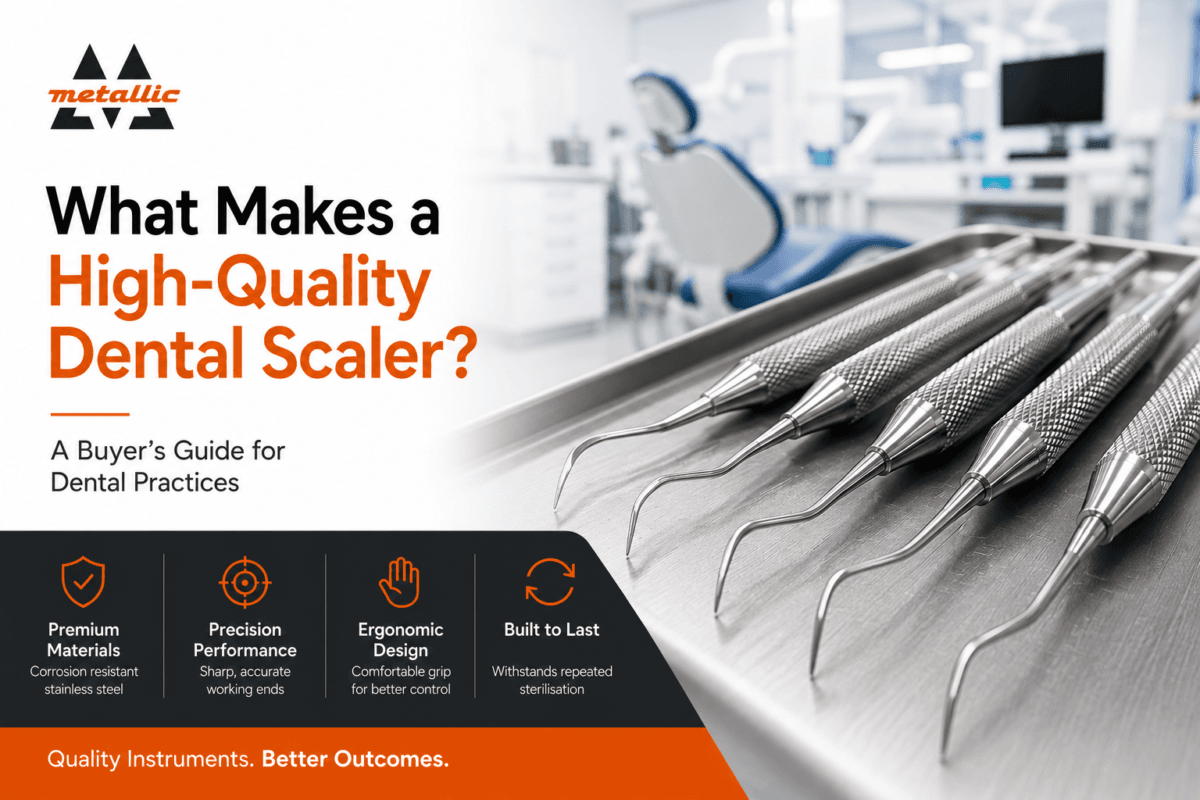
What Makes a High-Quality Dental Scaler? A Buyer’s Guide for Dental Practices
What Makes a High-Quality Dental Scaler? A Buyer’s Guide for Dental Practices
Introduction
Choosing the right dental scaler is essential for delivering effective preventive and periodontal care. However, not all scalers offer the same level of performance, durability, or comfort. Understanding what makes a high-quality dental scaler can help dental practices invest in instruments that improve clinical efficiency, support patient comfort, and provide long-term value.
In 2026, dental professionals are increasingly prioritising instrument quality as they seek reliable tools that withstand repeated sterilisation cycles while maintaining precision and performance. As a result, selecting the right scaler has become an important purchasing decision for many clinics.
Why Dental Scaler Quality Matters
Dental scalers are among the most frequently used instruments in preventive and periodontal procedures.
A high-quality scaler can help:
- Improve calculus removal
- Enhance tactile sensitivity
- Reduce clinician fatigue
- Support patient comfort
- Maintain consistent clinical performance
Therefore, scaler quality directly affects both treatment outcomes and workflow efficiency.
1. High-Grade Stainless Steel Construction
One of the most important factors to consider when purchasing dental scalers is the quality of the material.
Professional-grade stainless steel offers:
- Superior corrosion resistance
- Greater durability
- Better edge retention
- Longer service life
Consequently, clinics can reduce replacement frequency and maintain reliable performance.
2. Sharp and Precisely Finished Working Ends
The effectiveness of a scaler depends largely on the quality of its working ends.
High-quality scalers feature:
- Precisely manufactured tips
- Consistent edge geometry
- Smooth finishing
- Reliable cutting performance
As a result, clinicians can remove deposits more efficiently and accurately.
3. Comfortable Ergonomic Handles
Ergonomics play a significant role in daily clinical use.
Well-designed handles help:
- Improve grip control
- Reduce hand fatigue
- Enhance instrument stability
- Support clinician comfort
Therefore, ergonomic scalers are often preferred in busy practices where instruments are used continuously throughout the day.
4. Resistance to Repeated Sterilisation
Dental instruments undergo frequent cleaning and autoclave sterilisation.
A high-quality scaler should:
- Resist corrosion
- Maintain structural integrity
- Retain performance after repeated cycles
- Preserve surface quality
Because of this, material and manufacturing quality are critical considerations.
5. Consistent Manufacturing Standards
Reliable performance depends on manufacturing consistency.
Clinics should look for scalers that offer:
- Uniform dimensions
- Consistent tip design
- Predictable handling characteristics
- Repeatable quality standards
As a result, clinicians can use instruments with greater confidence.
6. Appropriate Scaler Design for Clinical Procedures
Different procedures require different scaler designs.
Common options include:
Universal Scalers
Suitable for removing deposits throughout the mouth and commonly used during routine hygiene procedures.
Sickle Scalers
Designed for supragingival calculus removal and effective in interproximal areas.
Periodontal Scalers
Used in periodontal care where precision and access are particularly important.
Therefore, selecting the appropriate scaler type is just as important as selecting a quality instrument.
7. Long-Term Value Rather Than Lowest Price
While low-cost instruments may seem attractive initially, purchasing decisions should focus on long-term value.
High-quality scalers often provide:
- Better durability
- Fewer replacements
- More consistent performance
- Improved clinical efficiency
Consequently, many practices find that premium instruments offer lower lifetime costs.
8. Reliable Supplier and Manufacturer Support
The quality of a scaler is closely linked to the reliability of the manufacturer.
When evaluating suppliers, consider:
- Manufacturing standards
- Quality control procedures
- Product consistency
- Industry reputation
Therefore, purchasing from a trusted manufacturer can help ensure dependable instrument performance.
Common Mistakes When Buying Dental Scalers
Many clinics focus solely on price and overlook factors such as:
- Material quality
- Ergonomic design
- Sterilisation resistance
- Manufacturing consistency
- Long-term durability
As a result, practices may experience higher replacement costs and reduced efficiency.
How High-Quality Scalers Support Better Clinical Outcomes
When clinicians use professional-grade scalers, they often benefit from:
- Improved deposit removal
- Better control during procedures
- Greater tactile feedback
- Reduced hand fatigue
- More predictable results
Consequently, instrument quality contributes to both patient care and operational performance.
Why Dental Practices Are Investing in Premium Scalers
Many modern dental practices now view scaler quality as an investment rather than an expense.
This shift is driven by:
- Increased focus on efficiency
- Higher patient expectations
- Long-term cost considerations
- Growing emphasis on clinician ergonomics
Therefore, premium scalers continue to gain popularity across dental practices.
Role of Metallic Products
Metallic Products manufactures precision-engineered dental scalers designed to support clinical performance, durability, and practitioner comfort.
Features include:
- High-quality stainless steel construction
- Precision-crafted working ends
- Sterilisation-compatible designs
- Reliable long-term performance
This helps dental professionals maintain efficiency and achieve consistent treatment outcomes.
Conclusion
Understanding what makes a high-quality dental scaler helps dental practices make informed purchasing decisions. From material quality and ergonomic design to durability and manufacturing consistency, several factors contribute to scaler performance and long-term value.
By investing in professional-grade dental scalers, clinics can improve efficiency, support patient care, and reduce long-term instrument replacement costs.