
Beauty Instruments
How to Choose the Right Nail Art Tools for Salon and Home Use
How to Choose the Right Nail Art Tools for Salon and Home Use
Introduction
Understanding how to choose the right nail art tools is essential for every nail technician and salon professional. A high-quality set of nail art tools does far more than apply design, it allows for fine detail, consistent precision, and a clean, professional finish across every design style. Whether creating intricate hand-painted patterns, precise line work, or detailed embellishments, the quality of the tools used can significantly influence both the result and the client experience.
Why Tool Quality Matters in Nail Art
Nail art is fine, detailed work carried out on a small surface, where control and consistency matter more than speed. Technicians rely on precise brushes, dotting tools, and applicators to create clean lines, even dots, and consistent designs across every nail.
Good quality tools help technicians:
- Achieve clean, precise line work and detailing
- Reduce smudging or uneven application
- Work confidently across a range of design styles
- Maintain consistent results across clients
- Extend the life of the tools themselves
As a result, choosing the right nail art tools is an important decision for every salon and independent technician.
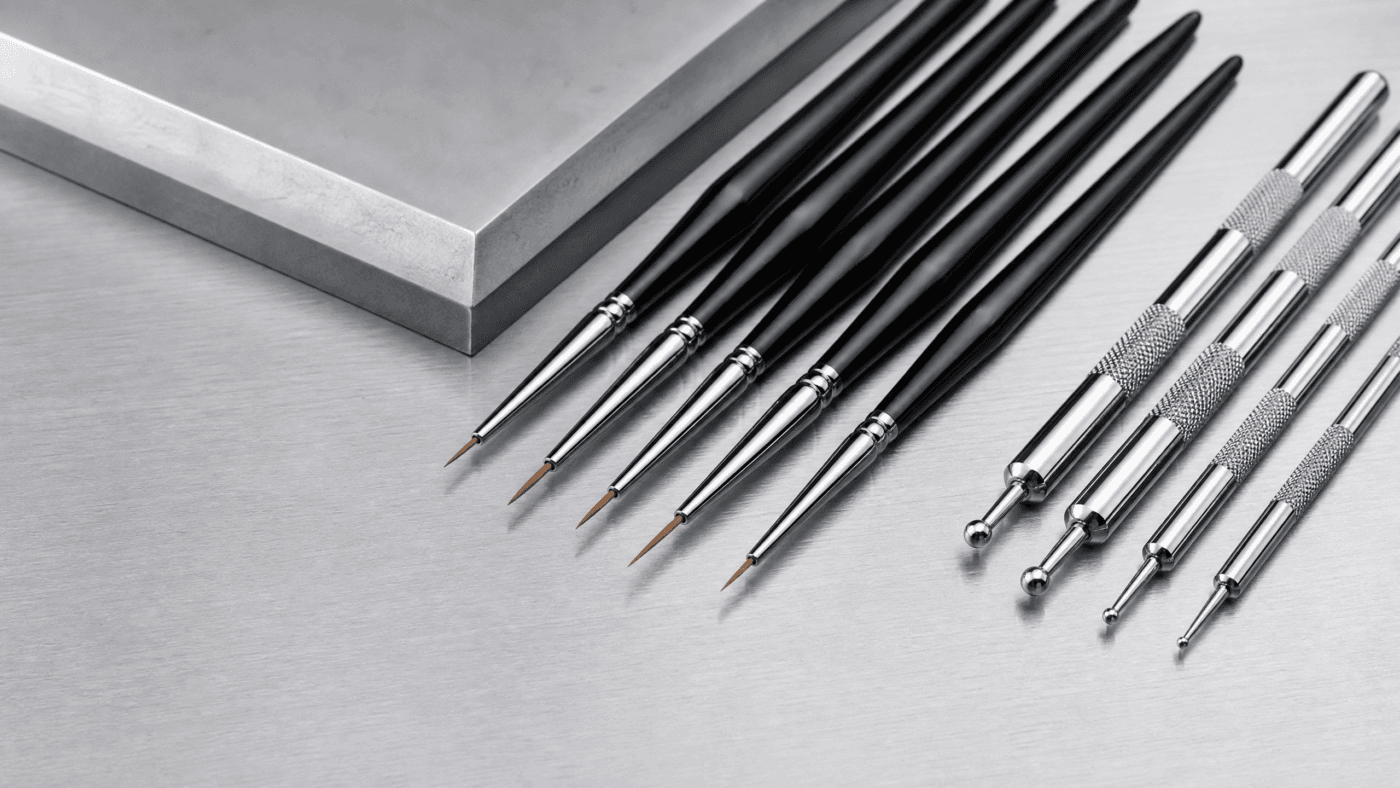
How Tool Quality Influences Design Results
Not all nail art tools offer the same level of performance.
High-quality tools offer:
- Fine, precisely shaped brush tips and dotting ends
- Smooth, controlled application
- Secure, comfortable grip
- Reliable, long-lasting materials
- Consistent detailing across every design
In contrast, poor-quality tools can lead to smudged lines, uneven dots, and an inconsistent finish.
1. Brush and Dotting Tool Precision Affects Detail Quality
The tip shape of brushes and dotting tools determines how precisely a technician can create fine lines, dots, and patterns.
Premium fine-tip tools offer:
- Greater control for intricate detailing
- Cleaner, more consistent line work
- Even, well-formed dots and accents
- Reduced risk of smudging mid-design
Consequently, higher-quality tips directly improve the precision and consistency of every design.
2. Tip and Bristle Material Affect Application
The materials used in brush bristles and applicator tips determine how smoothly product is applied.
Quality materials provide:
- Smooth, even product distribution
- Better control over line thickness
- Reduced fraying or wear over repeated use
- More consistent results across different polish and gel types
Furthermore, choosing the right material allows technicians to work confidently across different design techniques.
3. Handle Control and Grip Affect Precision
Nail art work involves small, repeated, highly detailed movements.
A well-designed handle provides:
- Better control during fine, detailed work
- Reduced hand fatigue over a full appointment
- More consistent pressure across each tool
- Improved comfort during longer, detailed sessions
Therefore, handle design plays a direct role in both comfort and precision.
4. Sterilisation and Hygiene Compatibility
Reusable nail art tools are used across multiple clients, so hygiene compatibility is essential.
Premium tools are designed to:
- Withstand cleaning and sterilisation without losing shape
- Resist product buildup that can affect performance
- Maintain bristle and tip integrity over time
- Meet salon hygiene and infection control standards
As a result, investing in hygiene-compatible tools supports both compliance and long-term durability.
5. Tool Range and Versatility Support Different Styles
Nail art covers a wide range of techniques, from fine line work to dotting, striping, and detailing.
A well-rounded tool set can:
- Cover multiple design styles without needing separate purchases
- Support both beginner and advanced techniques
- Provide flexibility as design trends change
- Improve overall efficiency during appointments
Consequently, a versatile tool range benefits both technician efficiency and design variety.
Common Problems Caused by Low-Quality Nail Art Tools
Using low-quality nail art tools may result in:
- Smudged or uneven line work
- Inconsistent dots and detailing
- Bristles or tips that fray or wear quickly
- Reduced control during fine work
- Reduced overall tool lifespan
These issues can affect both client satisfaction and a salon’s reputation.
How to Choose the Right Nail Art Tools
When selecting nail art tools, consider the following features:
Fine, Precisely Shaped Tips
Choose brushes and dotting tools with well-formed, consistent tips for accurate detailing.
Quality Tip and Bristle Material
Look for materials that apply product smoothly and hold their shape over time.
Comfortable Handle Control
Ergonomic handles support precision and reduce fatigue during detailed work.
Hygiene and Sterilisation Compatibility
Tools should withstand cleaning without losing shape or performance.
A Versatile Tool Range
A well-rounded set supports multiple design styles and techniques.
Why Salons Should Invest in Quality Nail Art Tools
Although premium nail art tools may have a higher initial cost, they often provide greater long-term value.
Benefits include:
- Cleaner, more professional detailing
- Reduced risk of inconsistent or smudged designs
- Longer tool lifespan
- Reduced replacement frequency
- Stronger client trust through consistent, high-quality designs
Therefore, investing in quality nail art tools supports both design results and salon reputation.
Role of Metallic Products
Metallic Products manufactures precision-engineered beauty instruments designed to meet the needs of modern nail and beauty professionals.
Our nail art tools feature:
- Precisely shaped brush and dotting tips
- Smooth, controlled application
- Comfortable, ergonomic handling
- Durable construction built for repeated professional use
These features help technicians achieve clean, professional detailing with every design.
FAQ
Brushes and applicators should be cleaned according to standard salon hygiene procedures, with reusable metal tools sterilised and brush heads cleaned or replaced as needed.
Some techniques work well across both, but certain brushes and applicators perform better with specific product types, so it’s worth choosing tools suited to what you use most.
Yes, many sets are designed to support both beginner and professional-level techniques, though technicians developing more advanced designs may benefit from expanding their toolkit over time.
If bristles fray, lose shape, or no longer apply product evenly despite proper care, it’s time to replace them.
Conclusion
Understanding how to choose the right nail art tools helps salon professionals and technicians appreciate the importance of investing in high-quality equipment. Precise tips, quality materials, comfortable handling, and hygiene compatibility all contribute to cleaner detailing and a better client experience.
By selecting premium nail art tools and maintaining them properly, salons can improve design consistency, reduce smudging or errors, and build a stronger professional reputation.