
Uncategorized
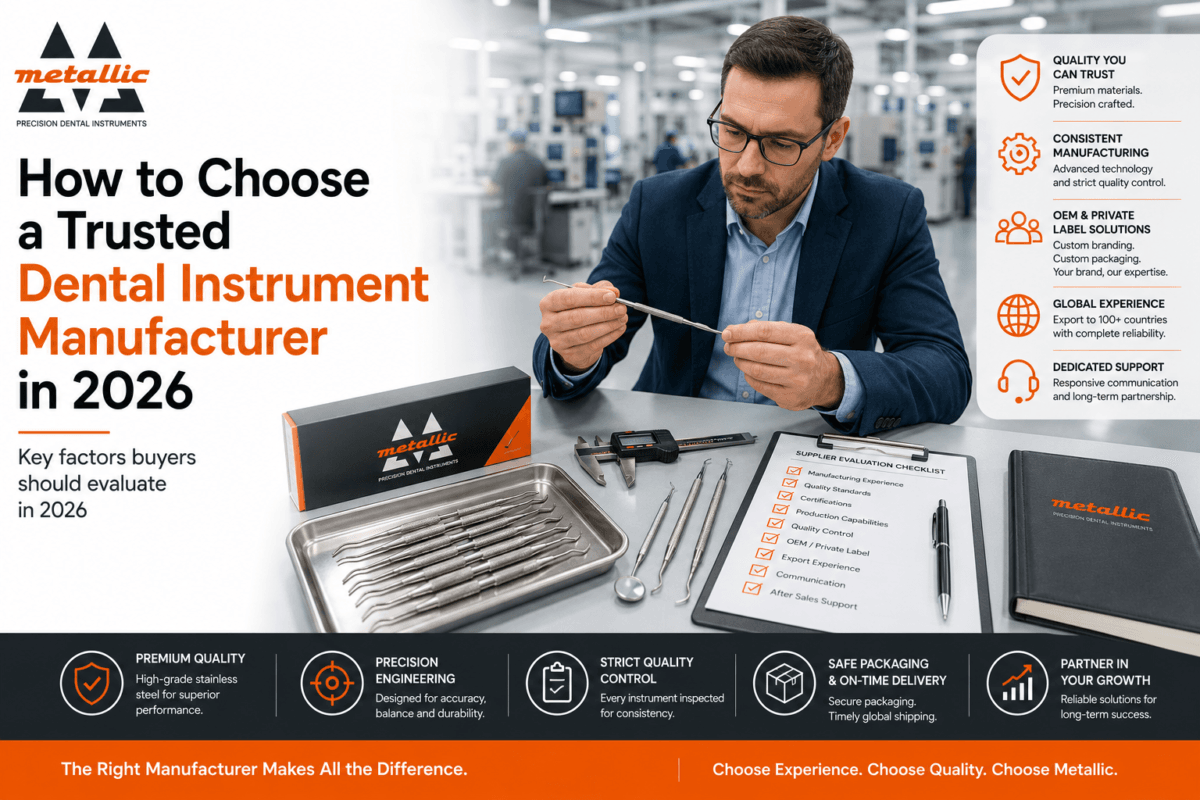
How to Choose a Trusted Dental Instrument Manufacturer in 2026
How to Choose a Trusted Dental Instrument Manufacturer in 2026
Introduction
If you are wondering how to choose a trusted dental instrument manufacturer, you are not alone. Distributors, dental brands, clinics, and procurement teams all face the challenge of finding reliable suppliers that can deliver consistent quality, dependable service, and long-term value. As the global dental industry continues to expand, selecting the right manufacturing partner has become more important than ever. Understanding what separates a trusted manufacturer from an average supplier can help buyers make informed purchasing decisions and reduce business risks.
Why Choosing the Right Dental Instrument Manufacturer Matters
Dental instruments play a critical role in patient care and clinical performance. Therefore, buyers should carefully evaluate manufacturers before placing an order.
A reliable manufacturer can help:
- Ensure consistent product quality
- Support long-term business growth
- Reduce product returns and complaints
- Improve customer satisfaction
- Deliver dependable supply chain performance
As a result, selecting the right manufacturing partner becomes an important business decision rather than simply a purchasing choice.
1. Evaluate Manufacturing Experience
Experience remains one of the strongest indicators of reliability.
Manufacturers with years of industry experience often have:
- Established production systems
- Skilled craftsmanship
- Better quality control processes
- Strong industry knowledge
Furthermore, experienced manufacturers are usually better equipped to meet international market requirements.
2. Assess Product Quality Standards
Product quality should always be a top priority.
Before selecting a manufacturer, buyers should evaluate:
- Material quality
- Surface finishing
- Instrument precision
- Durability
- Consistency across product ranges
High-quality instruments not only perform better but also strengthen customer confidence.
3. Review Manufacturing Capabilities
Different manufacturers offer different production capabilities.
Important factors include:
- Product range
- Production capacity
- Custom manufacturing options
- OEM services
- Private label solutions
Consequently, buyers should choose a supplier that can support both current and future business needs.
4. Verify Quality Control Processes
Reliable manufacturers invest heavily in quality assurance.
A strong quality control system helps ensure:
- Product consistency
- Reduced defects
- Reliable performance
- Compliance with specifications
Therefore, buyers should always ask about inspection and quality control procedures.
5. Check Industry Certifications
Certifications demonstrate a commitment to quality and compliance.
Common certifications may include:
- ISO quality management certifications
- Regulatory compliance documentation
- Product quality standards
Although certifications alone do not guarantee excellence, they often indicate a professional manufacturing operation.
6. Evaluate Communication and Customer Support
Strong communication is essential for successful business relationships.
A trusted manufacturer should provide:
- Timely responses
- Clear information
- Order updates
- Technical assistance
Moreover, responsive customer support can help prevent misunderstandings and delays.
7. Assess OEM and Private Label Capabilities
Many distributors and dental brands require custom branding solutions.
A capable manufacturer should support:
- Private label production
- Custom logos
- Custom packaging
- Product customization
As a result, businesses can develop stronger brand identities and expand their product offerings.
8. Review Export Experience
International buyers should evaluate a manufacturer’s export capabilities.
Experienced exporters often understand:
- International shipping requirements
- Export documentation
- Customs procedures
- Global customer expectations
Therefore, export experience can reduce logistical challenges and improve order reliability.
9. Look Beyond Price
Many buyers focus primarily on price. However, the lowest price does not always provide the best value.
Instead, consider:
- Product quality
- Durability
- Consistency
- Service reliability
- Long-term business benefits
In many cases, higher-quality instruments generate better value over time.
10. Request Samples Before Large Orders
Product samples allow buyers to evaluate manufacturing quality before making a larger commitment.
When reviewing samples, assess:
- Finish quality
- Precision
- Material consistency
- Ergonomics
- Overall workmanship
Consequently, sample evaluation can reduce purchasing risks and improve confidence in supplier selection.
Common Mistakes Buyers Should Avoid
Many buyers encounter problems because they:
- Choose suppliers based solely on price
- Skip sample evaluation
- Ignore quality control procedures
- Overlook communication standards
- Fail to verify manufacturing capabilities
Avoiding these mistakes can help create stronger and more reliable supplier relationships.
Why Long-Term Manufacturing Partnerships Matter
Successful businesses often work with manufacturers for many years.
Long-term partnerships can provide:
- Consistent product quality
- Improved communication
- Better planning
- Greater operational efficiency
- Stronger business growth opportunities
Therefore, selecting the right manufacturer should focus on long-term value rather than short-term cost savings.
Why Buyers Choose Metallic Products
Metallic Products manufactures high-quality dental, surgical, beauty, and veterinary instruments for customers worldwide.
Key strengths include:
- Precision manufacturing
- Premium stainless steel materials
- Strict quality control processes
- OEM and private label capabilities
- International export experience
- Reliable customer support
These capabilities help distributors, dental brands, and healthcare suppliers build confidence in their supply chain.
Conclusion
Understanding how to choose a trusted dental instrument manufacturer in 2026 is essential for businesses seeking quality, consistency, and long-term success. By evaluating manufacturing experience, quality standards, certifications, communication, and production capabilities, buyers can make informed decisions and reduce procurement risks.
A trusted manufacturing partner does more than supply products. They help support growth, protect reputation, and contribute to long-term business success.