
Dental Instruments
How to Choose the Right Dental Elevators
How to Choose the Right Dental Elevators
Introduction
Understanding how to choose the right dental elevators is essential for every dentist, oral surgeon, and dental professional performing extractions. A high-quality elevator does far more than loosen a tooth, it provides controlled leverage, protects surrounding bone and soft tissue, and helps clinicians work efficiently while minimising patient discomfort. Whether used to begin an extraction, luxate a stubborn root, or remove root fragments, the quality and design of the elevator can significantly influence both the outcome and the overall procedure.
Why Tool Quality Matters in Dental Elevation
Elevation is often the first and most critical step in a tooth extraction. Clinicians rely on precise, well-balanced elevators to loosen the periodontal ligament and widen the socket before forceps are used, or in some cases, to remove a tooth entirely without forceps.
Good quality elevators help clinicians:
- Apply controlled, predictable force
- Reduce the risk of slippage during use
- Minimise trauma to surrounding bone and soft tissue
- Work efficiently across straightforward and complex extractions
- Extend the working life of the instrument itself
As a result, choosing the right dental elevator is an important decision for every dental practice and procurement team.
How Instrument Quality Influences Extraction Outcomes
Not all dental elevators offer the same level of performance.
High-quality elevators offer:
- Precisely shaped, sharp blade edges for effective engagement
- A secure, comfortable handle for controlled force application
- Reliable, long-lasting construction
- Consistent performance across repeated procedures
In contrast, poor-quality elevators can lead to slippage, uneven force distribution, and unnecessary trauma to the socket or surrounding tissue.
1. Blade Shape and Design Affect Application
Dental elevators come in a range of blade shapes, each suited to different clinical situations.
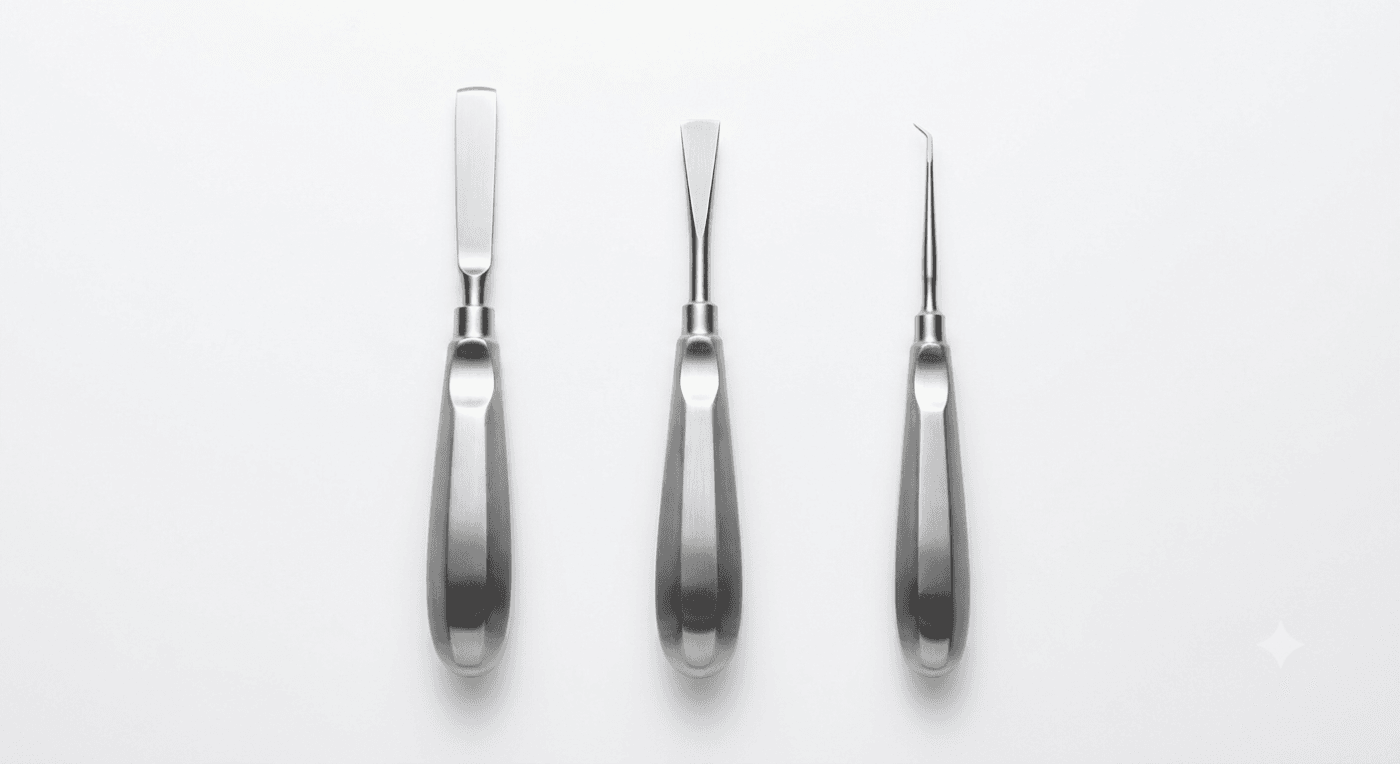
Common blade types include:
- Straight elevators: general-purpose use for loosening teeth before forceps application
- Triangular (Cryer) elevators: used in pairs to remove root fragments from adjacent sockets
- Pick-type elevators: fine, narrow tips for removing small root fragments with precision
Consequently, choosing the correct blade shape for the clinical situation improves both control and efficiency.
2. Handle Design Affects Control and Comfort
The handle determines how much force a clinician can apply, and how comfortably they can apply it.
A well-designed handle provides:
- A secure, non-slip grip even when hands are wet
- Better control over rotational and lever force
- Reduced hand fatigue during longer or more complex extractions
- Consistent performance across a full clinical day
Furthermore, ergonomic handle design directly supports more controlled, predictable elevation technique.
3. Blade Sharpness and Edge Quality
A sharp, precisely ground blade edge is essential for effective engagement with the periodontal ligament.
Premium blade edges offer:
- Cleaner initial engagement with less applied force
- Reduced risk of slippage against the tooth surface
- More predictable, controlled loosening of the tooth
- Better performance across varying root and bone density
Therefore, blade sharpness has a direct impact on both safety and clinical efficiency.
4. Material Quality and Durability
Dental elevators experience significant mechanical stress during use, so material quality matters.
Premium surgical-grade stainless steel offers:
- Resistance to bending or blade deformation under load
- Long-term durability across thousands of sterilisation cycles
- Consistent blade sharpness retention over time
- Better overall value despite a higher upfront cost
As a result, investing in high-quality materials reduces the risk of instrument failure during a procedure.
5. Sterilisation Compatibility Supports Hygiene Standards
Dental elevators are reused across many patients, so durability under repeated sterilisation is essential.
Premium instruments are designed to:
- Withstand autoclave sterilisation without corroding or loosening
- Maintain blade sharpness and handle integrity over time
- Meet clinical hygiene and infection control standards
- Resist wear from repeated cleaning cycles
Consequently, sterilisation-compatible elevators support both compliance and long-term reliability.
Common Problems Caused by Low-Quality Dental Elevators
Using low-quality dental elevators may result in:
- Slippage during application, increasing risk of soft tissue injury
- Blades that dull or deform under normal clinical force
- Inconsistent engagement with the tooth or root
- Reduced control during complex extractions
- Reduced overall instrument lifespan
These issues can affect both procedural safety and clinical efficiency.
How to Choose the Right Dental Elevators
When selecting dental elevators, consider the following features:
Correct Blade Shape for the Procedure
Choose straight, triangular, or pick-type elevators based on the specific clinical need.
Sharp, Precisely Ground Blade Edge
Look for a blade that engages cleanly with minimal applied force.
Secure, Ergonomic Handle
A comfortable, non-slip grip supports better control and reduces fatigue.
High-Grade Material
Surgical-grade stainless steel resists deformation and holds an edge over repeated use.
Sterilisation Compatibility
Instruments should withstand autoclave sterilisation without losing sharpness or alignment.
Why Dental Practices Should Invest in Quality Elevators
Although premium dental elevators may have a higher initial cost, they often provide greater long-term value.
Benefits include:
- More controlled, predictable extractions
- Reduced risk of soft tissue or bone trauma
- Longer instrument lifespan
- Reduced replacement frequency
- Greater confidence and efficiency for the clinical team
Therefore, investing in quality dental elevators supports both patient outcomes and practice efficiency.
Role of Metallic Products
Metallic Products manufactures precision-engineered dental instruments designed to meet the needs of modern dental practices.
Our dental elevators feature:
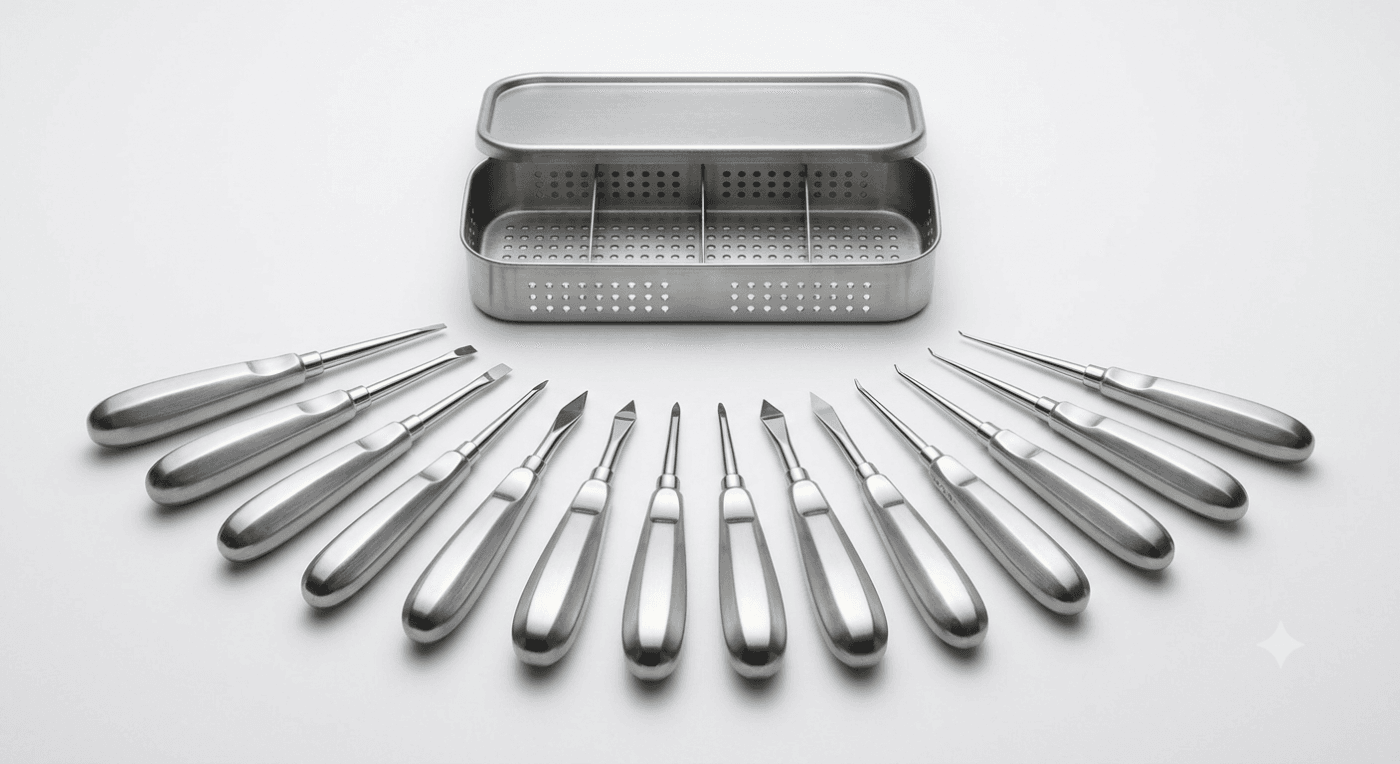
- Precisely shaped, sharp blade edges across straight, triangular, and pick-type designs
- Secure, ergonomic handles for controlled application
- Surgical-grade stainless steel construction
- Durable build quality suited to repeated sterilisation
These features help dental professionals achieve controlled, predictable results throughout every extraction.
FAQ
A straight elevator is used for general-purpose loosening of a tooth before forceps application, while Cryer (triangular) elevators are used in pairs, typically to remove root fragments from adjacent sockets after a tooth has fractured.
Pick-type elevators are best suited to removing small, fine root fragments where a narrow, precise tip is needed rather than broader leverage.
They should be cleaned and sterilised after every patient use, following standard clinical infection control protocols.
Yes, high-quality surgical-grade elevators can typically be professionally resharpened, extending their usable lifespan beyond lower-quality alternatives.
If the blade no longer engages cleanly, shows visible deformation, or the handle grip has degraded despite proper care, it’s time to replace the instrument.
Conclusion
Understanding how to choose the right dental elevators helps dental professionals and procurement teams appreciate the importance of investing in high-quality instruments. Correct blade shape, sharp edges, ergonomic handle design, and sterilisation compatibility all contribute to safer, more controlled extractions.
By selecting premium dental elevators and maintaining them properly, dental practices can improve procedural confidence, reduce the risk of complications, and support long-term clinical efficiency.