
Uncategorized
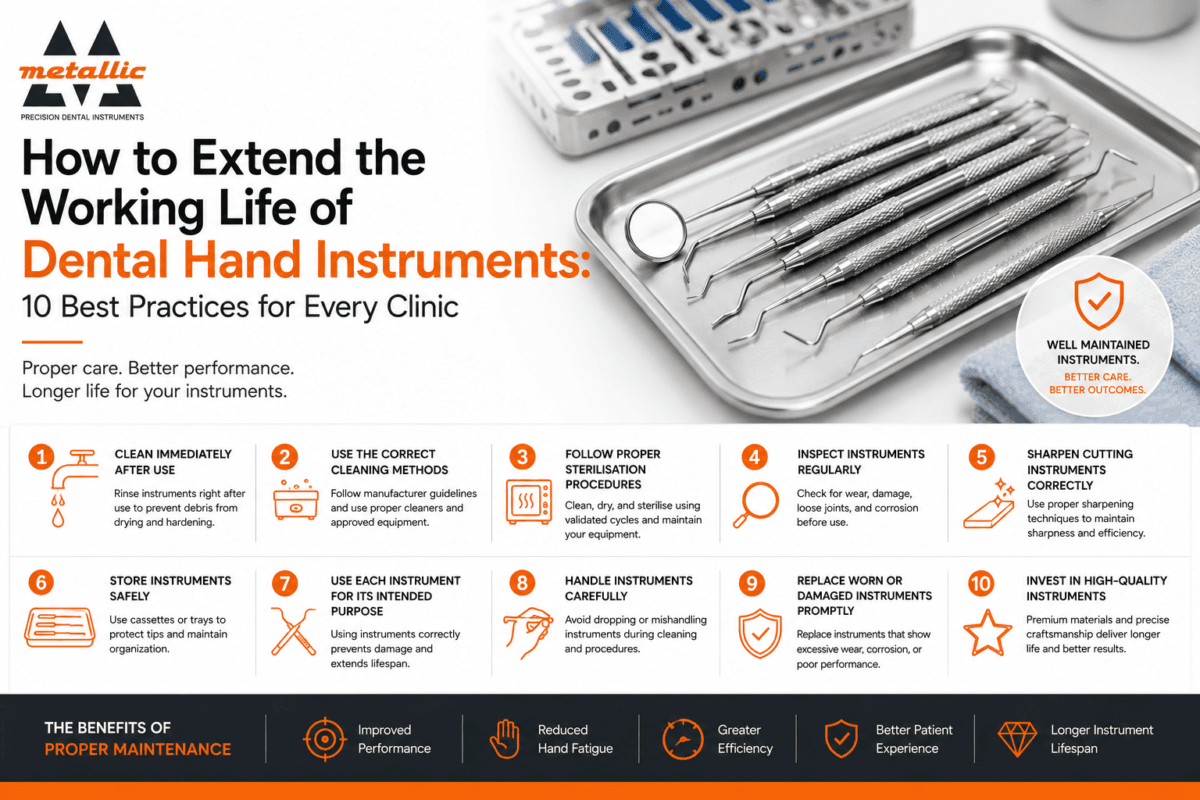
How to Extend the Working Life of Dental Hand Instruments: 10 Best Practices for Every Clinic
How to Extend the Working Life of Dental Hand Instruments: 10 Best Practices for Every Clinic
Introduction
Knowing how to extend the working life of dental hand instruments is essential for every dental practice. High-quality instruments are a valuable investment, and proper care helps maintain their performance, precision, and safety. By following the correct cleaning, sterilisation, inspection, and storage procedures, dentists, dental hygienists, and dental therapists can maximise instrument lifespan, reduce replacement costs, and maintain consistent clinical results.
Why Instrument Lifespan Matters
Dental hand instruments are used repeatedly throughout the working day. Over time, cleaning, sterilisation, sharpening, and regular clinical use naturally cause wear.
Maintaining instruments correctly helps practices:
- Improve clinical performance
- Reduce replacement costs
- Maintain treatment efficiency
- Enhance patient comfort
- Protect long-term investment
Therefore, every clinic should implement a consistent instrument care programme.
1. Clean Instruments Immediately After Use
Cleaning begins as soon as a procedure finishes.
Allowing blood, saliva, or debris to dry on instruments makes cleaning more difficult and may increase the risk of surface damage.
Instead, rinse instruments promptly and follow your clinic’s approved decontamination protocol.
As a result, instruments remain cleaner and easier to maintain.
2. Use the Correct Cleaning Methods
Not every instrument requires the same cleaning approach.
Follow the manufacturer’s recommendations and use appropriate equipment such as:
- Ultrasonic cleaners
- Instrument washers
- Approved cleaning solutions
Avoid abrasive materials that may damage the instrument surface.
Proper cleaning protects both appearance and function.
3. Follow Proper Sterilisation Procedures
Sterilisation protects patients and preserves instrument quality.
Always:
- Clean instruments thoroughly before sterilisation.
- Dry instruments before packaging.
- Use validated sterilisation cycles.
- Follow recommended autoclave procedures.
Furthermore, regular equipment maintenance helps ensure consistent sterilisation performance.
4. Inspect Instruments Regularly
Routine inspections allow clinicians to identify problems before they affect patient care.
Check for:
- Loose joints
- Damaged tips
- Worn cutting edges
- Surface corrosion
- Cracks or distortion
Early detection often prevents further damage and reduces unexpected instrument failure.
5. Sharpen Cutting Instruments Correctly
Cutting instruments gradually lose their edge through normal use.
Scalers, curettes, chisels, and other cutting instruments should be sharpened using appropriate techniques.
Correct sharpening helps:
- Restore cutting efficiency
- Reduce operator fatigue
- Improve treatment precision
- Extend instrument service life
However, excessive sharpening removes valuable material and eventually requires instrument replacement.
6. Store Instruments Safely
Storage plays an important role in protecting dental hand instruments.
Use:
- Instrument cassettes
- Protective trays
- Organised storage systems
Avoid placing loose instruments together because contact between working ends may cause unnecessary damage.
Good storage practices also improve workflow and instrument organisation.
7. Use Each Instrument for Its Intended Purpose
Every dental instrument is designed for a specific clinical task.
Using an instrument incorrectly may:
- Damage the working end
- Reduce clinical performance
- Shorten instrument lifespan
Therefore, clinicians should always select the correct instrument for each procedure.
8. Handle Instruments Carefully During Cleaning
Improper handling during reprocessing can damage precision instruments.
For example, dropping instruments or allowing them to strike one another may affect alignment, sharpness, or surface finish.
Careful handling helps preserve manufacturing precision and long-term performance.
9. Replace Worn or Damaged Instruments Promptly
Even with excellent maintenance, every instrument has a limited service life.
Replace instruments when you notice:
- Excessive wear
- Bent or damaged tips
- Loose box joints
- Corrosion
- Poor clinical performance
Replacing worn instruments helps maintain treatment quality and patient safety.
10. Invest in High-Quality Dental Hand Instruments
Maintenance can extend instrument life, but manufacturing quality also plays a major role.
Premium dental hand instruments often provide:
- Better corrosion resistance
- Improved edge retention
- Greater durability
- More consistent performance
- Longer service life
Consequently, investing in quality instruments often reduces long-term ownership costs.
Common Mistakes That Shorten Instrument Life
Many practices unintentionally reduce instrument lifespan by:
- Delaying cleaning
- Using unsuitable cleaning chemicals
- Over-sharpening cutting instruments
- Storing instruments incorrectly
- Ignoring routine inspections
- Continuing to use damaged instruments
Avoiding these mistakes helps protect your investment and maintain clinical efficiency.
How Proper Maintenance Improves Clinical Performance
Well-maintained instruments support better dentistry.
Clinicians often benefit from:
- Improved tactile sensitivity
- Greater precision
- Reduced hand fatigue
- Faster procedures
- More predictable treatment outcomes
As a result, both clinicians and patients benefit from proper instrument care.
Why Choose High-Quality Dental Hand Instruments?
Although maintenance is essential, the quality of the instrument itself remains equally important.
High-quality dental hand instruments typically feature:
- Premium stainless steel construction
- Precision manufacturing
- Excellent edge retention
- Ergonomic handle designs
- Reliable sterilisation compatibility
These features help practices achieve dependable performance over many years.
Role of Metallic Products
Metallic Products manufactures precision-engineered dental hand instruments designed to deliver durability, reliability, and long-term clinical performance.
Our product range includes:
- Dental scalers
- Gracey and universal curettes
- Extraction forceps
- Elevators
- Needle holders
- Diagnostic instruments
Every instrument is manufactured using premium materials and strict quality control standards to support modern dental practice.
Conclusion
Understanding how to extend the working life of dental hand instruments helps dental professionals protect their investment while maintaining high clinical standards. Proper cleaning, sterilisation, sharpening, storage, and routine inspections all contribute to longer instrument life and better treatment outcomes.
By combining effective maintenance practices with high-quality instruments, dental practices can improve efficiency, reduce replacement costs, and provide consistent patient care.