
Metallic Blogs
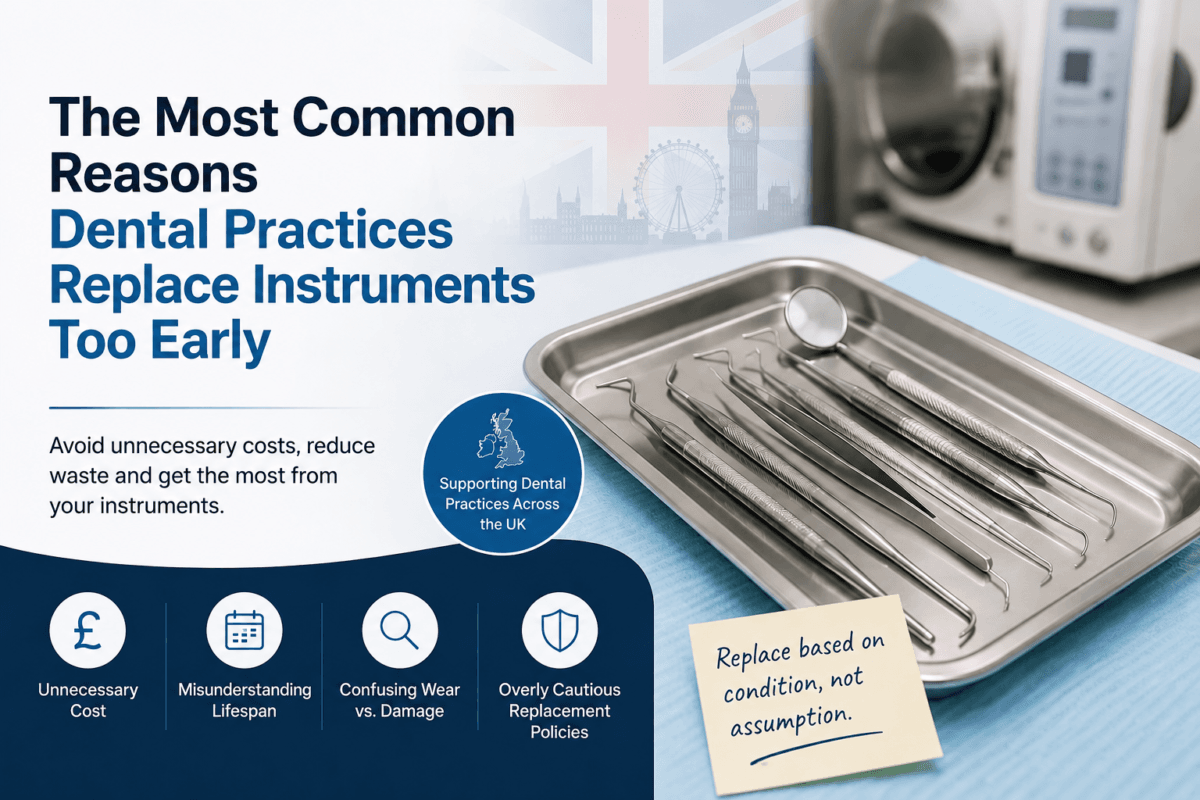
The Most Common Reasons Dental Practices Replace Instruments Too Early
The Most Common Reasons Dental Practices Replace Instruments Too Early
Introduction
Understanding the most common reasons dental practices replace instruments too early can help clinics reduce procurement costs, improve efficiency, and maximise the lifespan of their dental instruments. While all instruments eventually need replacement, many practices unknowingly shorten their useful life through avoidable mistakes in handling, maintenance, sterilisation, and storage.
In 2026, rising operational costs are encouraging UK dental practices to focus more closely on instrument longevity. As a result, clinics are increasingly looking for ways to protect their investment and reduce unnecessary replacement expenses.
Why Early Instrument Replacement Is a Problem
Replacing instruments too frequently can lead to:
- Higher procurement costs
- Increased operational expenses
- Workflow disruptions
- Inventory management challenges
- Reduced return on investment
Therefore, extending instrument lifespan is an important part of running an efficient dental practice.
1. Incorrect Sterilisation Procedures
One of the most common causes of premature instrument replacement is improper sterilisation.
Common mistakes include:
- Using incorrect autoclave settings
- Failing to clean instruments before sterilisation
- Leaving moisture on instruments after processing
- Using unsuitable cleaning chemicals
As a result, instruments may develop corrosion, staining, or reduced functionality much sooner than expected.
2. Poor Instrument Handling
Daily handling has a significant impact on instrument lifespan.
Damage often occurs when instruments are:
- Dropped onto hard surfaces
- Used for unintended purposes
- Handled roughly during procedures
- Transported without protection
Consequently, even high-quality instruments can suffer unnecessary wear and damage.
3. Inadequate Staff Training
Many clinics underestimate the importance of proper instrument training.
Without clear protocols, staff may:
- Use incorrect cleaning methods
- Store instruments improperly
- Miss signs of wear and damage
- Handle delicate instruments carelessly
Therefore, ongoing training helps protect valuable equipment and improve consistency.
4. Improper Storage Practices
Storage conditions directly affect instrument longevity.
Common storage mistakes include:
- Storing instruments while damp
- Mixing delicate instruments together
- Using overcrowded trays
- Exposing instruments to moisture
Because of this, instruments may experience corrosion, scratching, or mechanical damage.
5. Choosing Low-Quality Instruments
Low-cost instruments often appear attractive initially. However, they frequently require replacement sooner than premium alternatives.
Common issues include:
- Inferior stainless steel quality
- Poor corrosion resistance
- Weak joints and hinges
- Inconsistent manufacturing standards
As a result, clinics may spend more over time despite lower upfront costs.
6. Skipping Regular Inspections
Routine inspections help identify problems before they become serious.
Without regular checks, clinics may overlook:
- Loose joints
- Dull cutting edges
- Misaligned tips
- Surface corrosion
Therefore, small issues can develop into major failures that require complete replacement.
7. Overusing Instruments Beyond Their Intended Purpose
Every instrument is designed for specific clinical tasks.
Problems arise when clinicians use instruments for procedures they were not designed to perform.
This can lead to:
- Excessive wear
- Tip damage
- Loss of precision
- Structural weakness
Consequently, instruments may fail much earlier than expected.
8. Poor Maintenance Routines
Maintenance is essential for preserving performance.
Effective maintenance includes:
- Routine cleaning
- Inspection schedules
- Proper lubrication where required
- Timely repair of minor issues
As a result, clinics can significantly extend instrument lifespan.
9. Failure to Organise Instrument Inventory
Poor inventory management can contribute to unnecessary replacements.
For example:
- Duplicate purchases may occur
- Instruments may be misplaced
- Rotation systems may not be followed
- Wear patterns may become uneven
Therefore, organised inventory systems help maximise instrument usage.
10. Ignoring Manufacturer Recommendations
Manufacturers provide guidance on:
- Cleaning methods
- Sterilisation procedures
- Storage requirements
- Maintenance schedules
Ignoring these recommendations often increases the risk of premature wear and replacement.
How Clinics Can Extend Instrument Lifespan
Dental practices can improve instrument longevity by:
- Following proper sterilisation protocols
- Training staff regularly
- Conducting routine inspections
- Using appropriate storage systems
- Purchasing high-quality instruments
- Maintaining organised inventory procedures
As a result, clinics can reduce replacement costs while maintaining clinical performance.
Why Quality Instruments Last Longer
Professional-grade stainless steel instruments are designed to:
- Resist corrosion
- Withstand repeated sterilisation
- Maintain precision
- Deliver consistent performance
Therefore, investing in quality instruments often reduces long-term procurement expenses.
Role of Metallic Products
Metallic Products supports dental professionals with:
- Precision-engineered stainless steel instruments
- Durable clinical-grade manufacturing
- Sterilisation-compatible designs
- Long-lasting professional performance
This helps dental practices reduce unnecessary replacements while maintaining high clinical standards.
Conclusion
Understanding the most common reasons dental practices replace instruments too early helps clinics make smarter operational and procurement decisions. Many replacements occur because of preventable issues such as poor sterilisation, improper handling, inadequate storage, and lack of maintenance.
By investing in high-quality instruments from Metallic Products and implementing proper care procedures, dental practices can improve efficiency, reduce costs, and maximise the value of their instrument investment.