
Surgical Instruments
Reusable vs Disposable Scalpel Blades: Which Is Right for Your Practice?
Sep
Reusable vs Disposable Scalpel Blades: Which Is Right for Your Practice?
Introduction
Choosing between reusable vs disposable scalpel blades is a common decision for surgical practices, clinics, and hospitals. Both options are widely used across medical settings, yet they differ significantly in cost, safety, and maintenance requirements. Understanding these differences helps practices select the right option for their procedures, patient volume, and budget.
What Are Disposable Scalpel Blades?
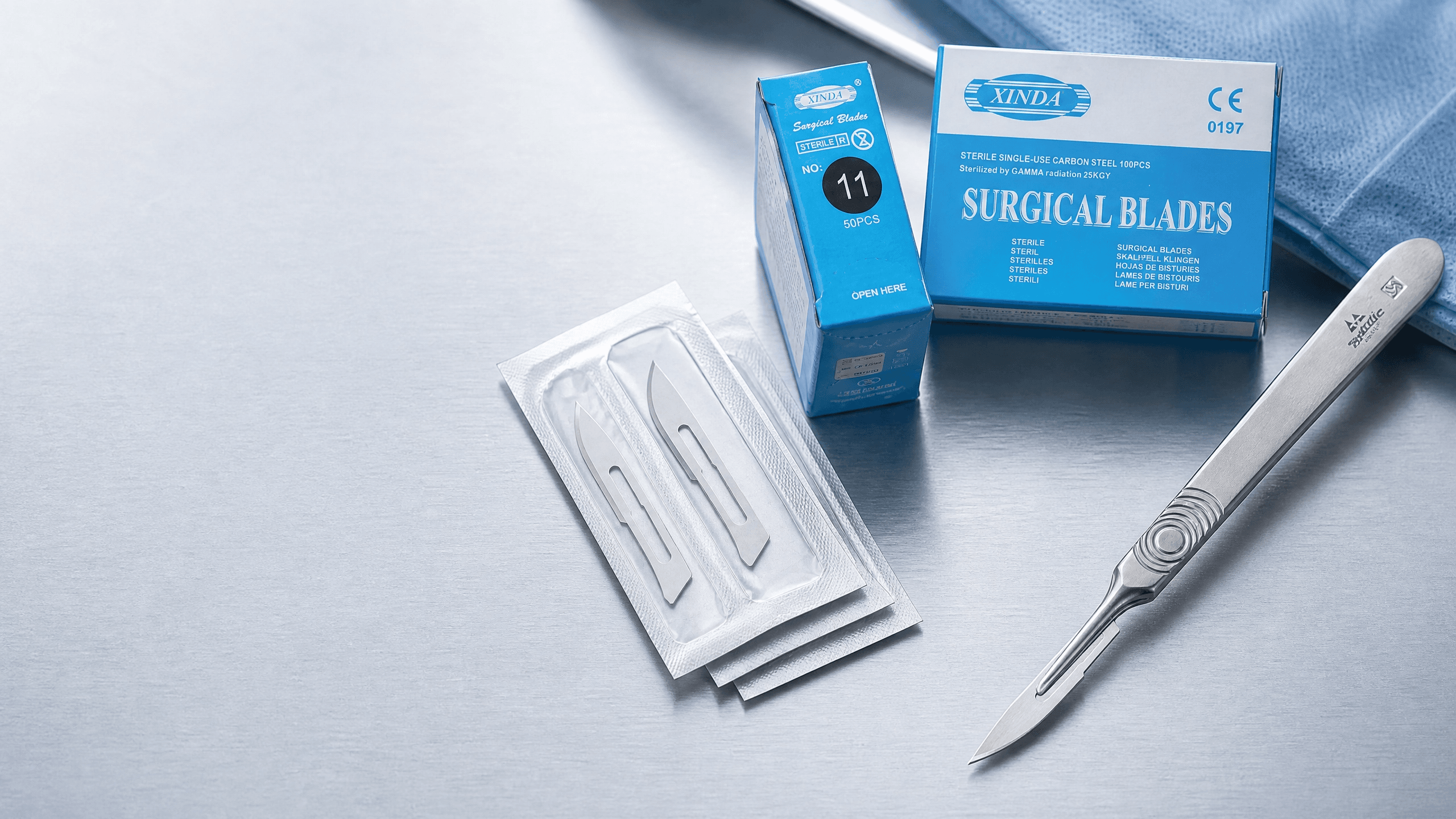
Disposable scalpel blades are single-use, pre-sterilised blades designed to be discarded immediately after one procedure. They typically attach to a separate reusable scalpel handle, with the blade itself thrown away after use.
Key Features of Disposable Blades
- Individually wrapped and pre-sterilised
- Consistent, guaranteed sharpness on first use
- No sterilisation required between uses
- Eliminates cross-contamination risk from reused blades
Common Sizes
Disposable blades are typically sold by number, with each shape suited to different procedures:
- No. 10, 11, 12, 15 – fit standard No. 3 handles, commonly used in general surgery and minor procedures
- No. 20, 21, 22, 23 – fit larger No. 4 handles, used for larger incisions in general and orthopaedic surgery
What Are Reusable Scalpels?
Reusable scalpels use a fixed or replaceable blade designed to withstand repeated sterilisation cycles, rather than being discarded after a single use.
Key Features of Reusable Scalpels
- Withstand repeated autoclave sterilisation
- Durable stainless steel construction
- Lower long-term cost per procedure at high volume
- Requires proper cleaning and sterilisation protocols between uses
Reusable vs Disposable: Key Differences
1. Cost Considerations
Disposable blades carry a per-unit cost with every procedure, but require no sterilisation equipment or staff time for reprocessing. Reusable scalpels have a higher upfront cost but a lower cost per use over time, provided sterilisation infrastructure is already in place. Therefore, disposable blades often suit lower-volume settings, while reusable options become more cost-effective at high procedure volume.
2. Infection Control
Disposable blades eliminate the risk of improper sterilisation between patients, since each blade is used once and discarded. Reusable scalpels rely entirely on correct sterilisation protocols — when properly autoclaved, they carry no greater infection risk, but any lapse in sterilisation procedure introduces risk that disposables avoid entirely. Consequently, many practices with strict sterile processing departments prefer reusable options, while smaller practices without dedicated sterilisation staff often default to disposable blades.
3. Sharpness and Consistency
Disposable blades guarantee a factory-fresh edge on every single use, with no variation from wear. Reusable scalpels, depending on design, may require periodic blade replacement or sharpening to maintain consistent cutting performance. As a result, procedures requiring very fine, consistent incisions often favour disposable blades.
4. Environmental and Waste Considerations
Disposable blades generate ongoing sharps waste with every procedure, requiring proper clinical waste disposal. Reusable scalpels generate less ongoing waste, since the same instrument serves many procedures before replacement. Practices focused on waste reduction may therefore lean toward reusable options where sterilisation capacity allows.
5. Handle Compatibility
Disposable blades attach to standard No. 3 or No. 4 scalpel handles, meaning a single reusable handle can be paired with many blade sizes and numbers as needed. This flexibility allows practices to stock one handle type alongside a range of blade sizes for different procedures.
Which Option Is Better for Your Practice?
The right choice depends on procedure volume, sterilisation infrastructure, and budget. High-volume hospitals with dedicated sterile processing departments often benefit from reusable systems long-term, while smaller clinics, single-use procedures, or settings without reliable sterilisation equipment typically favour disposable blades for guaranteed consistency and reduced infection risk. Many practices use both: disposable blades for routine procedures, and reusable scalpels for specific applications where blade durability or precision is prioritised.
Frequently Asked Questions
Both are safe when used correctly. Disposable blades remove sterilisation variability entirely, while reusable scalpels are equally safe when properly autoclaved between uses.
No. 10, 11, 12, and 15 fit standard No. 3 handles for general and minor procedures. No. 20, 21, 22, and 23 fit larger No. 4 handles for bigger incisions.
Yes, as long as the blade and handle size match (No. 3 or No. 4), a single handle can be used with multiple blade numbers.
Reusable handles typically last for years with proper care, though they should be inspected regularly for wear, corrosion, or damage to the blade-locking mechanism.
Role of Metallic Products
Metallic Products supplies both disposable scalpel blades and reusable surgical scalpel handles, including No. 3 and No. 4 compatible options, in surgical-grade stainless steel, individually wrapped and sterile where applicable.
Conclusion
Choosing between reusable and disposable scalpel blades comes down to procedure volume, sterilisation capacity, and cost priorities. Understanding these differences helps practices make an informed choice, whether that means fully disposable, fully reusable, or a combination of both.
Explore our full range of scalpel blades and handles.