
Uncategorized
How to Choose the Right Dental Elevator for Different Extraction Procedures
How to Choose the Right Dental Elevator for Different Extraction Procedures
Introduction
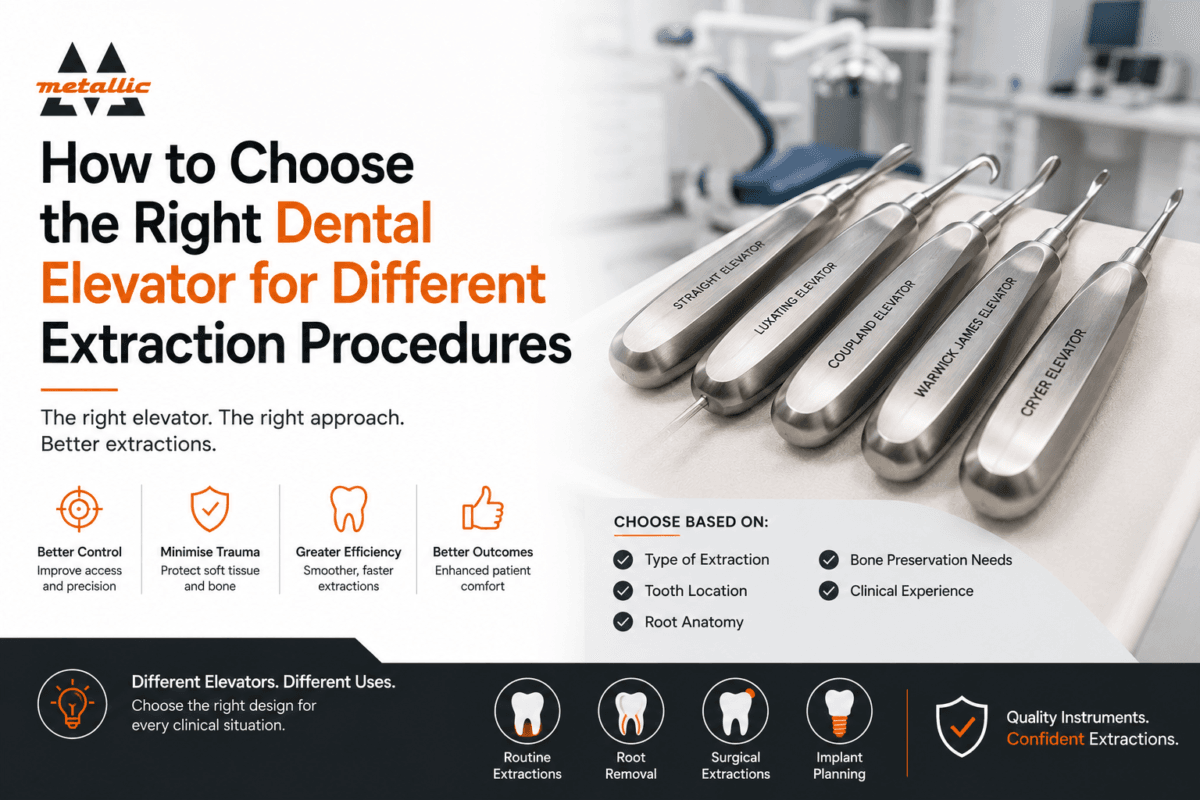
Choosing the right dental elevator is an important part of successful tooth extraction procedures. Different extraction cases require different levels of force, access, and precision, which is why understanding how to choose the right dental elevator for different extraction procedures can help dentists improve efficiency, minimise tissue trauma, and achieve better clinical outcomes.
Modern dental practices use a variety of elevators, each designed for specific applications. As a result, selecting the appropriate instrument can make extractions smoother, safer, and more predictable.
What Is a Dental Elevator?
A dental elevator is a surgical instrument used to loosen teeth, sever periodontal ligament fibres, and elevate roots before extraction.
Dental elevators help clinicians:
- Reduce extraction force
- Improve access to difficult areas
- Minimise trauma to surrounding tissues
- Facilitate controlled tooth removal
Therefore, they are considered essential instruments in both routine and surgical extractions.
Why Choosing the Right Dental Elevator Matters
Using the correct elevator can significantly affect the extraction process.
Benefits include:
- Improved procedural efficiency
- Better control during extraction
- Reduced risk of root fracture
- Enhanced patient comfort
- Greater preservation of surrounding bone and tissue
Consequently, dentists should carefully select elevators based on the clinical situation.
1. Straight Dental Elevators
Straight elevators are among the most commonly used extraction instruments.
Best Used For:
- Initial tooth luxation
- Loosening periodontal ligaments
- Routine extractions
- Elevating roots in accessible areas
Advantages:
- Versatile design
- Easy to handle
- Suitable for a wide range of procedures
As a result, straight elevators are often considered a core instrument in every extraction kit.
2. Luxating Elevators
Luxating elevators are designed with thinner, sharper blades than traditional elevators.
Best Used For:
- Atraumatic extractions
- Preserving alveolar bone
- Implant treatment planning
- Difficult tooth extractions
Advantages:
- Precise ligament separation
- Reduced tissue trauma
- Improved preservation of extraction sites
Therefore, many implant-focused clinicians prefer luxating elevators.
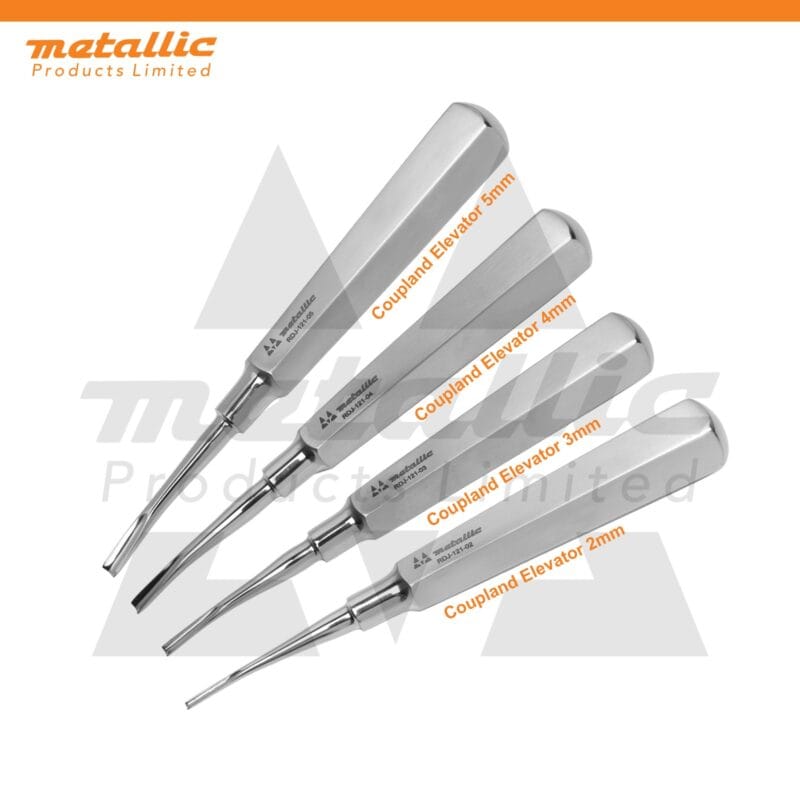
3. Coupland Elevators
Coupland elevators feature broad blades that are designed to create controlled leverage.
Best Used For:
- Loosening roots
- Elevating retained root fragments
- Extraction procedures requiring additional leverage
Advantages:
- Strong lifting capability
- Excellent root mobilisation
- Reliable control
Consequently, they remain a popular choice in oral surgery settings.
4. Warwick James Elevators
Warwick James elevators are available in straight, left, and right patterns.
Best Used For:
- Upper root extractions
- Root fragment removal
- Accessing confined extraction sites
Advantages:
- Improved access
- Better manoeuvrability
- Effective root retrieval
As a result, they are frequently used for maxillary extractions.
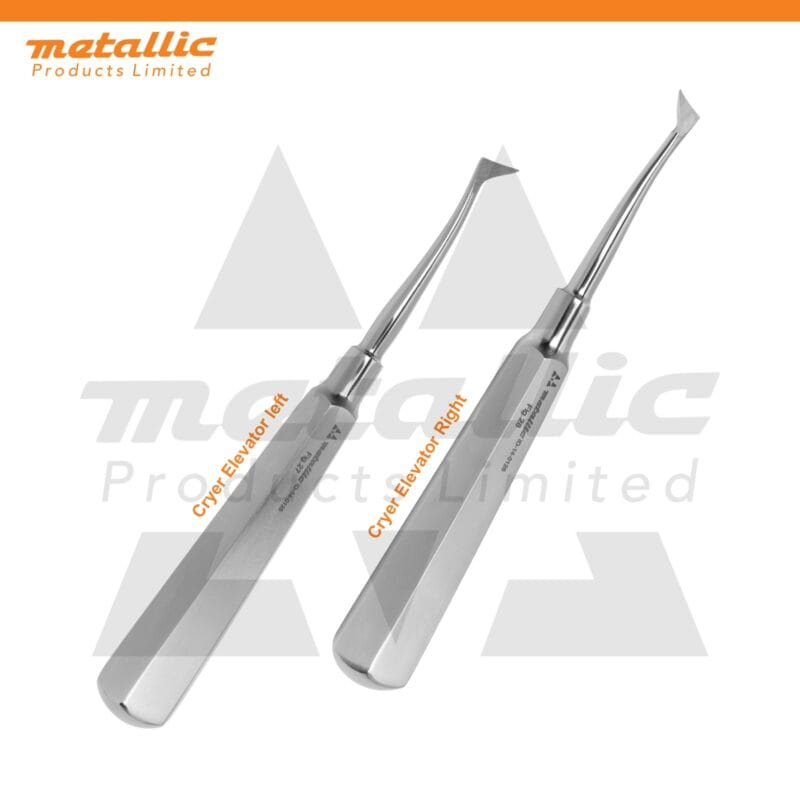
5. Cryer Elevators
Cryer elevators feature a triangular working end designed for specific root removal applications.
Best Used For:
- Broken roots
- Sectioned roots
- Difficult molar extractions
Advantages:
- Strong leverage
- Effective root engagement
- Excellent access in extraction sockets
Therefore, they are commonly used during surgical extractions.
Factors to Consider When Choosing a Dental Elevator
Selecting the right instrument involves more than simply choosing a particular design.
Clinicians should consider:
Type of Extraction
Routine and surgical procedures often require different elevator styles.
Tooth Location
Anterior, premolar, and molar extractions may require different instrument designs.
Root Anatomy
Complex root structures often demand specialised elevators.
Bone Preservation Requirements
Implant-related procedures may benefit from atraumatic extraction techniques.
Clinician Preference
Experience and technique can influence instrument selection.
Because of these factors, many dentists maintain a variety of elevators within their extraction kits.
What Makes a High-Quality Dental Elevator?
When purchasing dental elevators, practices should look for:
Premium Stainless Steel Construction
Supports durability and corrosion resistance.
Precision Manufacturing
Improves balance, control, and reliability.
Comfortable Ergonomic Handles
Helps reduce hand fatigue during procedures.
Consistent Working-End Design
Supports predictable clinical performance.
Sterilisation Compatibility
Ensures long-term durability after repeated autoclave cycles.
As a result, high-quality elevators often provide better long-term value.
Common Mistakes When Buying Dental Elevators
Many practices focus solely on price rather than performance.
Common mistakes include:
- Purchasing only one elevator type
- Ignoring handle ergonomics
- Overlooking material quality
- Selecting instruments based only on cost
- Failing to consider procedure requirements
Consequently, clinics may limit clinical flexibility and efficiency.
Why Dental Practices Invest in Multiple Elevator Types
No single elevator is suitable for every extraction.
Maintaining a selection of instruments allows clinicians to:
- Handle a wider range of cases
- Improve procedural efficiency
- Reduce extraction complications
- Adapt to different clinical scenarios
Therefore, comprehensive extraction kits often include several elevator designs.
How High-Quality Elevators Improve Clinical Performance
Professional-grade dental elevators can help support:
- Better control during extraction
- Reduced tissue trauma
- Improved clinician confidence
- Greater procedural efficiency
- Long-term instrument reliability
As a result, many practices prioritise quality when purchasing extraction instruments.
Role of Metallic Products
Metallic Products manufactures precision-engineered dental elevators designed for modern extraction procedures.
Features include:
- Premium stainless steel construction
- Precision-crafted working ends
- Ergonomic handling designs
- Sterilisation-compatible manufacturing
- Reliable clinical performance
This helps dental professionals perform extractions with confidence, efficiency, and precision.
Conclusion
Understanding how to choose the right dental elevator for different extraction procedures helps dentists select instruments that improve control, efficiency, and treatment outcomes. From straight and luxating elevators to Coupland, Warwick James, and Cryer designs, each instrument serves a specific clinical purpose.
By investing in high-quality dental elevators and maintaining a well-rounded extraction kit, practices can enhance procedural success and provide better patient care.