
Metallic Blogs
How Instrument Quality Affects Chair Time, Patient Comfort and Practice Efficiency
How Instrument Quality Affects Chair Time, Patient Comfort and Practice Efficiency
Introduction
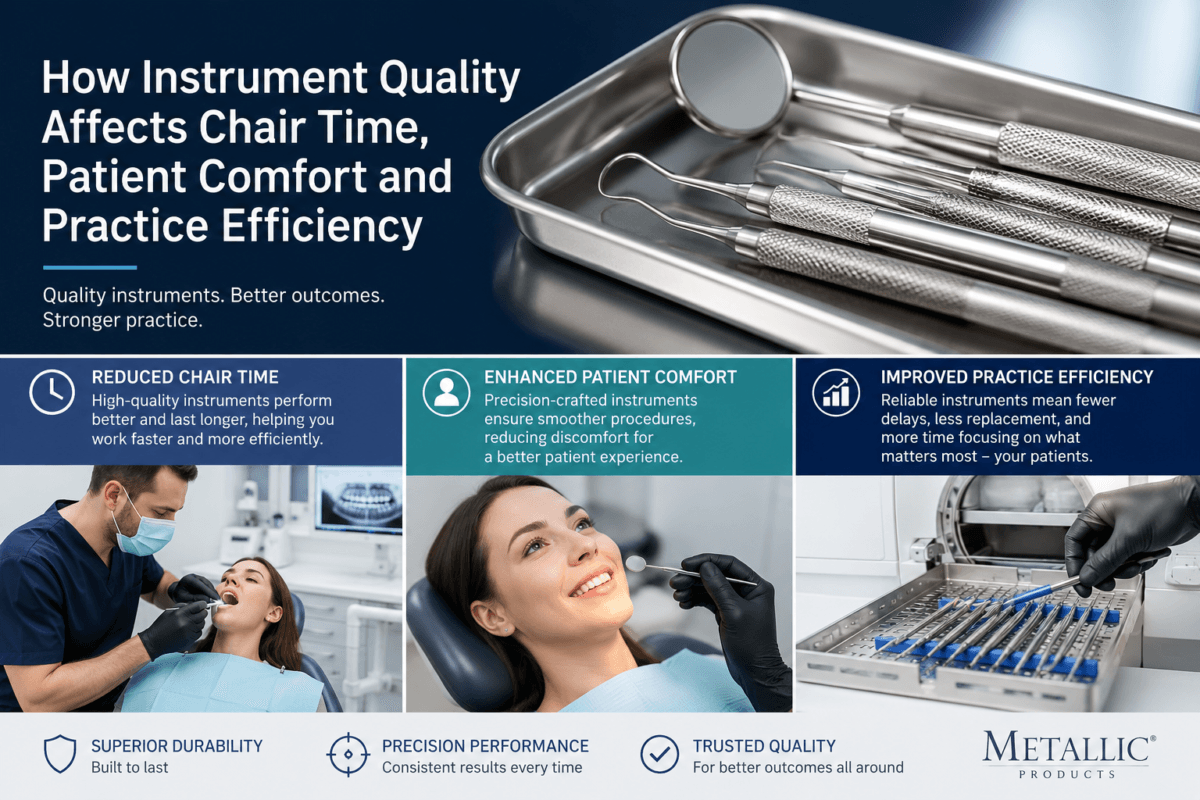
Understanding how instrument quality affects chair time, patient comfort and practice efficiency is essential for modern dental clinics. While many practices focus on treatment techniques and clinical expertise, the quality of dental instruments also plays a significant role in treatment outcomes and workflow performance.
In 2026, UK dental practices are increasingly investing in high-quality instruments because they help reduce treatment delays, improve patient experiences, and support smoother day-to-day operations. As a result, instrument quality has become a key factor in both clinical and business success.
Why Instrument Quality Matters More Than Ever
Dental instruments are used throughout almost every procedure. Consequently, their performance directly affects treatment speed, accuracy, and clinician confidence.
High-quality instruments can:
- Improve procedural efficiency
- Enhance clinical precision
- Reduce operator fatigue
- Support better patient experiences
- Extend instrument lifespan
Therefore, investing in quality instruments often delivers benefits beyond the initial purchase.
1. Quality Instruments Help Reduce Chair Time
Chair time is one of the most valuable resources in any dental practice.
When instruments perform consistently, clinicians can:
- Complete procedures more efficiently
- Avoid interruptions caused by instrument issues
- Reduce time spent adjusting or replacing tools
- Maintain smoother treatment workflows
As a result, appointments often run more efficiently and clinics can improve scheduling capacity.
2. Better Precision Leads to Faster Procedures
Precision is essential in modern dentistry.
High-quality instruments typically offer:
- Sharper working edges
- Better alignment
- Improved tactile feedback
- More predictable performance
Because of this, clinicians can work more accurately and confidently during procedures.
3. Patient Comfort Improves With Better Instruments
Patient comfort is increasingly important in today’s dental environment.
Poor-quality instruments may:
- Require additional pressure
- Increase treatment duration
- Create unnecessary discomfort
In contrast, precision-engineered instruments often allow clinicians to perform procedures more smoothly and efficiently.
Consequently, patients may experience shorter appointments and greater overall comfort.
4. Ergonomic Design Reduces Operator Fatigue
Dentists and hygienists perform repetitive movements throughout the day.
High-quality instruments often feature:
- Ergonomic handles
- Improved grip control
- Better weight balance
- Enhanced handling comfort
Therefore, clinicians can maintain precision while reducing strain during long clinical sessions.
5. Reliable Instruments Improve Workflow Efficiency
Workflow interruptions can affect productivity across an entire practice.
Instrument-related issues may include:
- Loose joints
- Misaligned tips
- Dull cutting surfaces
- Unexpected failures
By using reliable instruments, clinics can minimise these disruptions and maintain more consistent workflows.
6. Fewer Instrument Failures Mean Lower Costs
Low-quality instruments often require:
- Frequent repairs
- Earlier replacement
- Additional procurement costs
Although premium instruments may cost more initially, they often provide better long-term value due to their durability and reliability.
As a result, practices can reduce overall operating expenses over time.
7. High-Quality Instruments Support Sterilisation Performance
Modern dental clinics rely on repeated sterilisation cycles.
Professional-grade instruments are designed to:
- Resist corrosion
- Maintain precision after sterilisation
- Withstand repeated autoclave use
- Preserve surface integrity
Therefore, clinics benefit from longer-lasting performance and improved hygiene standards.
8. Practice Efficiency Extends Beyond the Treatment Room
Instrument quality influences more than individual procedures.
Reliable instruments can help:
- Improve appointment scheduling
- Reduce treatment delays
- Lower replacement frequency
- Simplify inventory management
Because of this, procurement decisions often have a direct impact on overall practice performance.
9. Why Many UK Clinics Are Investing in Better Instruments
Dental practices increasingly recognise that quality instruments are not simply a clinical expense.
Instead, they are an investment in:
- Efficiency
- Patient satisfaction
- Workflow consistency
- Long-term profitability
Consequently, many clinics now prioritise quality over the lowest purchase price.
10. Choosing the Right Supplier Matters
Even the best instrument design depends on manufacturing quality.
When selecting a supplier, clinics should consider:
- Material quality
- Manufacturing consistency
- Quality control standards
- Long-term reliability
Therefore, working with a trusted supplier is an important part of maintaining clinical excellence.
Role of Metallic Products
Metallic Products supports dental professionals with:
- Precision-engineered stainless steel instruments
- Sterilisation-compatible designs
- Consistent manufacturing quality
- Long-lasting clinical performance
This helps dental practices improve efficiency, patient experience, and long-term operational reliability.
Conclusion
Understanding how instrument quality affects chair time, patient comfort and practice efficiency helps dental clinics make smarter purchasing decisions. High-quality instruments improve precision, reduce workflow disruptions, support patient comfort, and contribute to long-term operational efficiency.
By investing in professional-grade instruments from Metallic Products, practices can improve both clinical performance and overall business productivity.